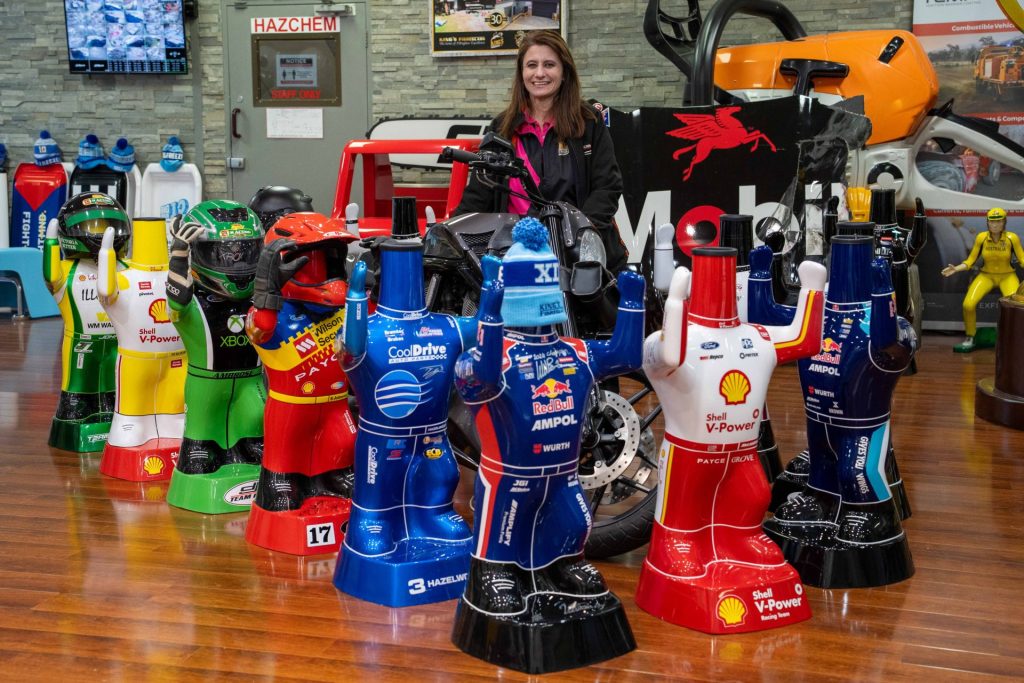
Lined up in rank formation in the King's Fibreglass showroom is an army of “mini me” fibreglass figures, their true purpose cleverly disguised: race helmet and glove dryers, a necessary piece of equipment at a racetrack.
Kerryn Caulfield, Executive Director, Composites Australia Inc. and Scott Compson, the Australia Inst. of Engineering
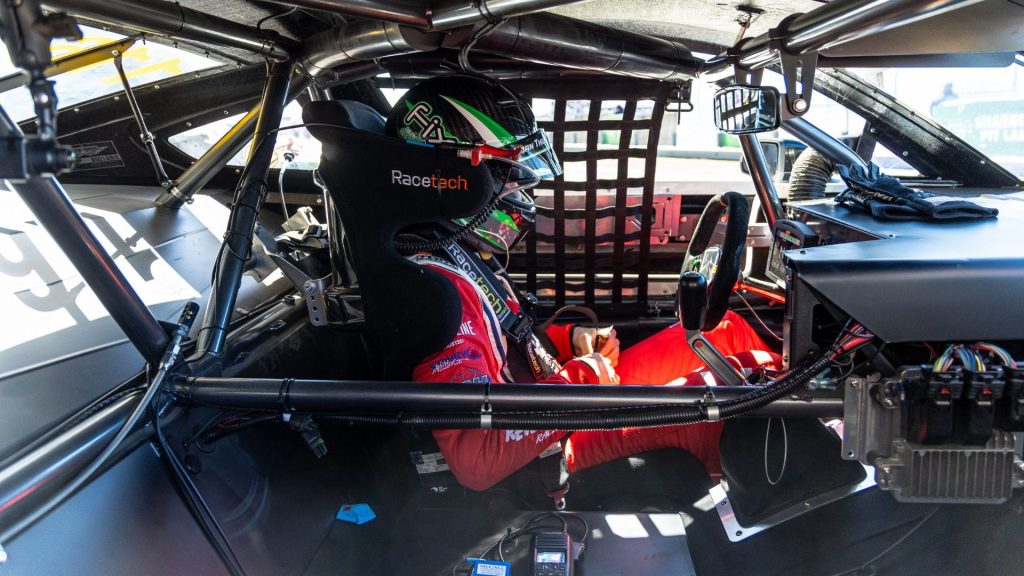
A racing cockpit is a hostile place, whatever the category. In Supercars, temperatures inside the car can run 20 to 30°C above ambient, reaching 65°C or more when the championship moves north to Darwin. The footwell is often the hottest area, with the exhaust system running directly beneath the driver’s feet; blistering and burns are not uncommon.
Drivers are sealed inside nearly six kilograms of heavy gear, including dense fireproof clothing, a helmet, gloves and boots. In this sweltering armour, a driver can shed up to three kilograms in sweat during just one race. After a gruelling stint, helmets and gloves in particular, emerge drenched, saturated with sweat.
According to Glen King, founder of King’s Fibreglass and self-proclaimed rev head, damp gear is more than just uncomfortable; it can sap a driver’s focus and quickly become a hygiene nightmare. “Left wet between sessions, equipment can stink within hours, a warning sign of bacteria and mould. Rapid drying keeps drivers fresh and ready to return to the cockpit sharp and undistracted.”
The ‘mini me’ figures were developed in-house at the company’s Bayswater facility using a proprietary fibreglass mould based on King’s design. Each figure contains a concealed electric fan at the base driving the cooling system.
Driver sealed inside dense fireproof clothing, a helmet, gloves and boots,
competing at the Shannon's Speed Series Tasmania, photo courtesy of Garry Rogers Motorsport Gallery
Gloves are placed over the raised arms, while the helmet sits on the crown. Vents channel air through the three outlets to dry equipment from the inside out. While all dryers share the same basic form, each is finished in team colours, providing every driver with a personalised unit.
At seasons commence, the dryers are delivered to each driver’s garage, where their uncanny likenesses add a splash of personality that teams love and fans flock to photograph. At seasons end, they are gathered up and returned to King’s to prepare them all for next season. Though built for function, these figures have become fan favourites, often starring in social media posts that celebrate and support the drivers. King’s has also exported a number of these Helmet and Glove Dryers to New Zealand, the UK and the USA, extending their appeal well beyond the Australian racing scene.
The ‘mini me’ figures were developed in-house at the company’s Bayswater facility using a proprietary fibreglass mould based on King’s design. Each figure contains a concealed electric fan at the base that drives the cooling system. According to Helen Attard (pictured), the dryers are delivered to each driver’s garage at the start of the season, where their uncanny likenesses add a splash of personality that teams love and fans flock to photograph.
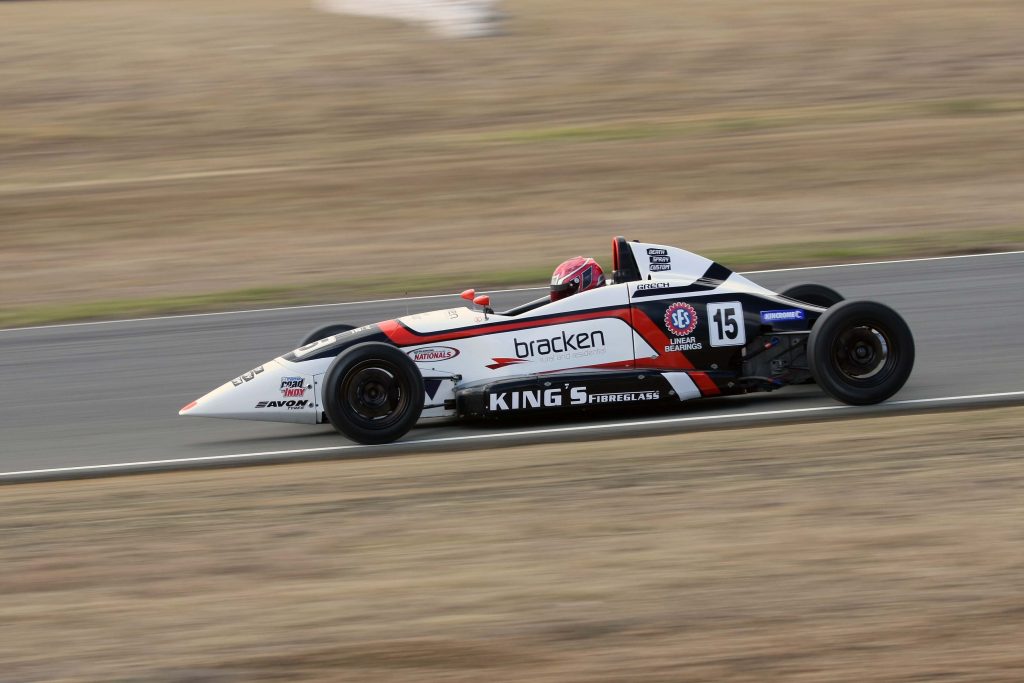
King’s motorsport pedigree runs deeper than the dryers themselves. The company has supplied fibreglass components to Borland Racing Developments since King’s earliest years in business, fabricating parts for BRD’s Spectrum Formula Ford and Sabre Formula Vee chassis.
Borland Racing itself is one of the more significant names in Australian open-wheel construction. Founded in Braeside, Victoria, in 1984, the company has produced championship-winning Formula Ford and Formula Vee chassis for four decades; its Spectrum has been the most consistently successful marque in Australian Formula Ford racing since 2004, and its Sabre Formula Vee — originally built from jigs purchased from Elfin Sports Cars — has claimed more than twenty state and national titles. It’s a long way from a race-day dryer to a championship-winning chassis, but the same Bayswater facility, and the same skilled trades, have had a hand in both.
A Borland Spectrum Formula Ford at speed, with King's Fibreglass branding along the sidepod. King's has made fibreglass components for Borland Racing Developments' Formula Ford and Formula Vee chassis from the company's earliest years. Image: Borland Racing Developments