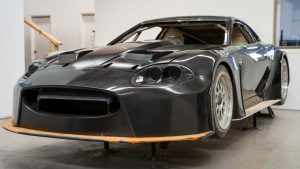
At the World Time Attack Challenge (WTAC), drivers race alone against the clock chasing the fastest lap, and every component has to earn its place. Sydney Composites engineers and fabricates front and rear aero for these cars, from wings to undertrays and diffusers, generating downforce and grip while keeping weight in check.
Written by Kerryn Caulfield, Executive Director, Composites Australia Inc.
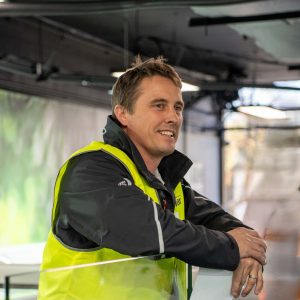
Keeping a race car firmly planted at speed requires aerodynamic precision, and that has become Sydney Composites’ speciality. Ten years after founder Greg Kerba began building carbon fibre components for motorsport, the company’s work now extends from Formula SAE and solar race cars to supersonic rockets, with carbon fibre structures engineered for applications where weight, strength and performance are critical.
Kerba’s interest in composites began well before Sydney Composites. His Year 12 project, a Hiawatha-style canoe, was featured on the front page of a boating magazine and led to an apprenticeship offer from Sydney yacht builder McConaghy in 2010.
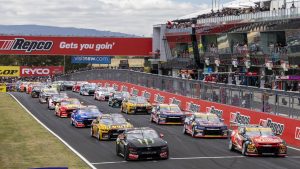
The turning point came through the World Time Attack Challenge (WTAC), where drivers compete individually against the clock to set the fastest possible lap. Unlike traditional wheel-to-wheel racing, time attack focuses on extracting maximum performance from a car in a single lap, making weight reduction, aerodynamic efficiency, and mechanical grip critical to the result.
At WTAC events, Kerba began looking closely at who manufactured the aerodynamic components, how they were made, and who was involved in their development. He was aware that carbon fibre offers the low weight and high stiffness needed to build large aerodynamic structures without adding unnecessary mass. At the front and rear of a race car, that means wings, undertrays and diffusers can be engineered to generate downforce and improve grip while keeping weight under control.
“What I looked into was who was making parts, how they were made, who was getting involved, and then I ended up speaking to an ex-Formula 1 aerodynamicist at the track. From that conversation, we started manufacturing some pre-preg wings for him,” Kerba said.
Front undertrays and rear diffusers were subsequently redesigned, with Sydney Composites taking on their manufacture and progressively developing its own production components. Vehicles fitted with the company’s components began achieving podium finishes, providing a demanding real-world test of its growing capability in lightweight, high-performance aerodynamics.
That progression has seen Sydney Composites build a vertical capability across much of the composites manufacturing process.
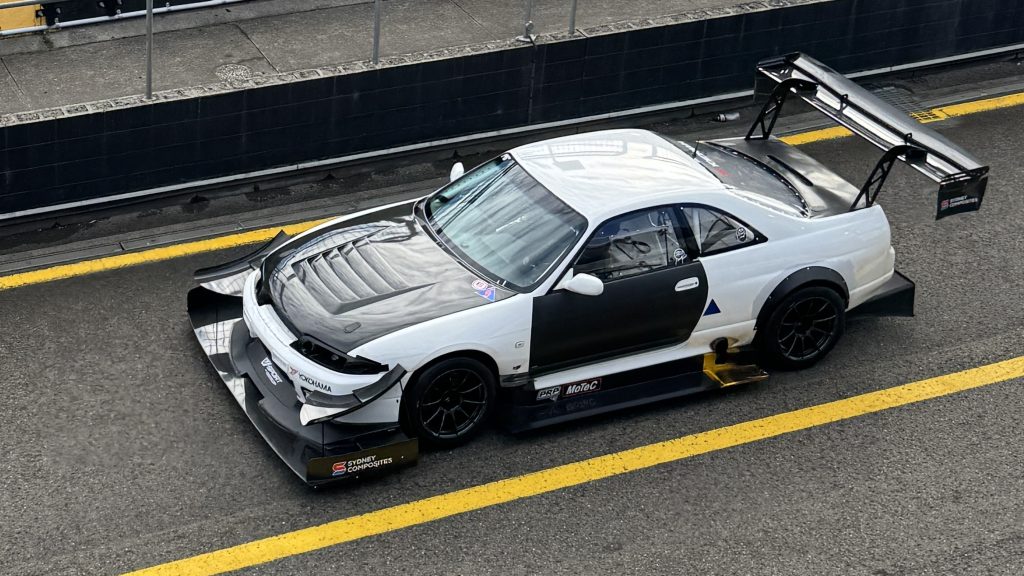
Seen from above in the pit lane, this time-attack Nissan Skyline R33 shows off its Sydney Composites carbon fibre, including the vented bonnet, doors, boot lid, front splitter and rear wing. Image supplied by Sydney Composites
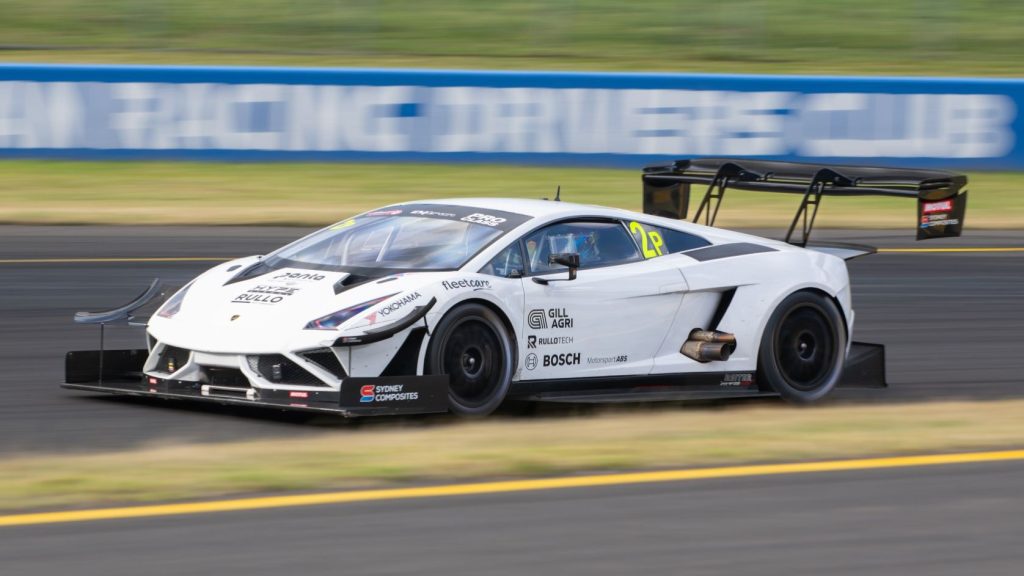
Sydney Composites' new carbon fibre aero mirrors join the front splitter, dive planes, and towering rear wing on this time-attack Lamborghini Gallardo. Image supplied by Sydney Composites
Carbon fibre is the company’s primary reinforcement, but the workshop also works with glass, basalt, aramid, polypropylene and coated fibre systems according to the application. Components are produced using vacuum infusion, prepreg and wet lay methods, then cured in an oven measuring 6 x 5 x 2.5 metres, large enough to accommodate full-size aerodynamic structures.
A four-axis CNC machine, with a 3,000 x 1,600 x 600 mm bed, brings pattern and mould production in-house, while a downdraft spray booth provides capacity for 2K painting and refinishing. The combination allows the company to move from development and patternmaking through composite manufacture, curing, machining and finishing without having to outsource any stage of the process.
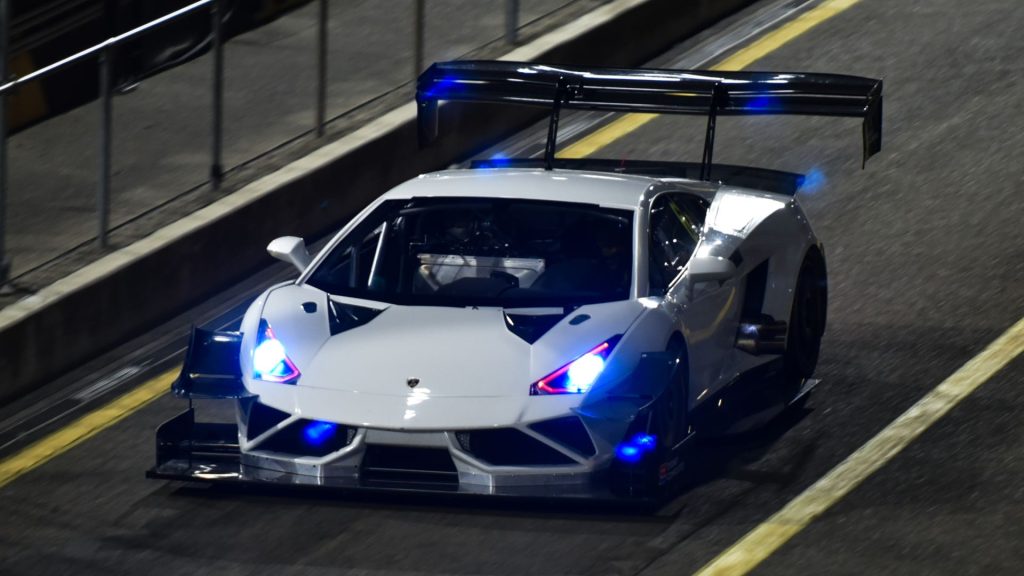
Seen head-on, the scale of the Sydney Composites aero package is clear, with the front splitter and dive planes out front and a towering rear wing behind. Image supplied by Sydney Composites
Maintaining that breadth of capability requires people skilled enough to operate across different stages of production. Kerba has recently brought engineering in-house by appointing a CAD designer previously an outsourced role, and has celebrated a staff member completing their apprentice. He is also seeking senior composite technicians, machinists and painters. The capability continues to be tested at the track.
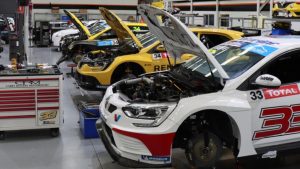
Sydney Composites is building a custom carbon fibre Nissan Skyline R34 for Sports Sedan racing and in September it took part in preparing for the two-day Yokohama WTAC Sydney event at Eastern Creek where more than 30 competing cars ran Sydney Composites aerodynamic components and achieved eight podiums across the event. The company will celebrate its tenth anniversary in December.
After a decade of progressively bringing more of the manufacturing process under its own control, Sydney Composites now faces a different challenge: how to scale that capability without losing the precision, flexibility, and standards that built its reputation in the first place.
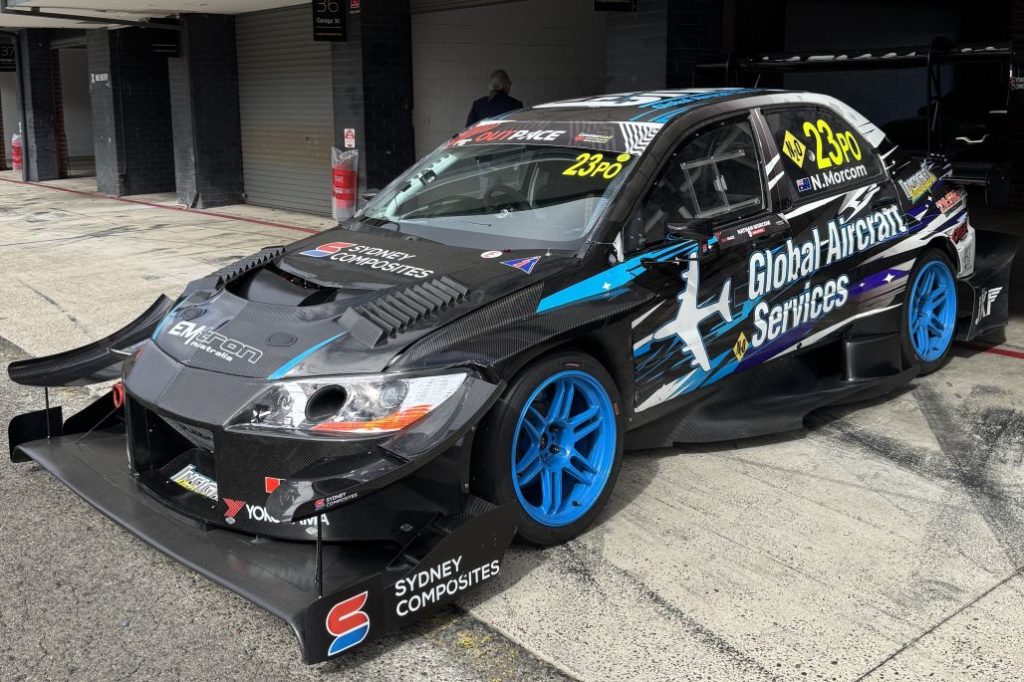
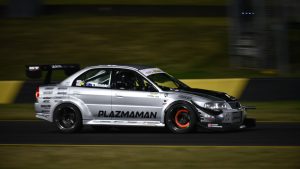
Global Aircraft Service's Mitsubishi Evolution time attack Lancer Evolution runs a large carbon fibre front splitter, end plates and dive planes from Sydney Composites. Image supplied by Sydney Composites