Automotive

President’s Letter: Issue 70 Connection Magazine
It is a pleasure to introduce this edition of Connection, which turns to composites
in Australian automotive, motorsport in particular.

It is a pleasure to introduce this edition of Connection, which turns to composites
in Australian automotive, motorsport in particular.
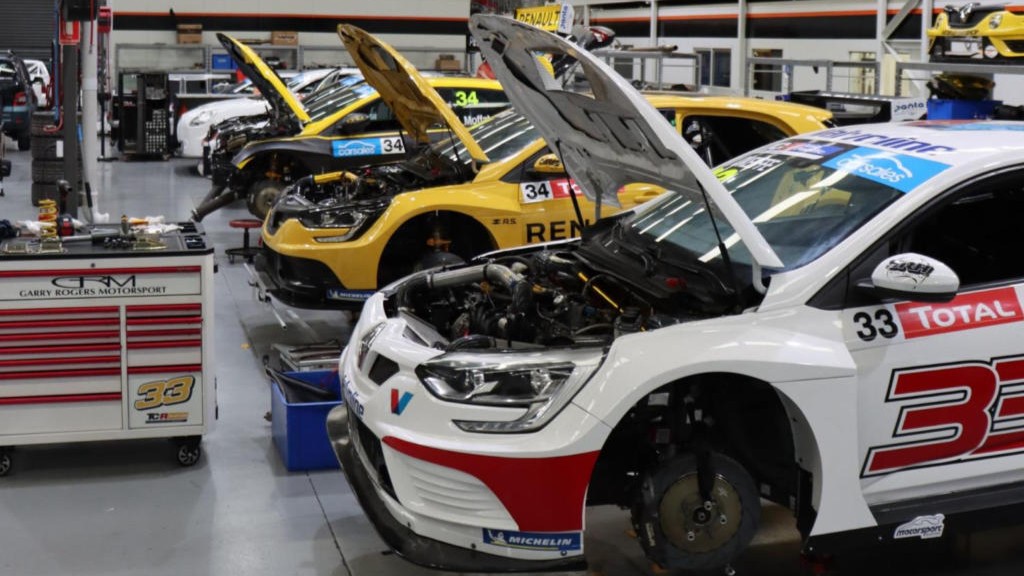
Australia’s oldest motorsport team, Garry Rogers Motorsport designs, builds and maintains its own cars across four categories, and has long been an early adopter of advanced materials and manufacturing methods. Auto Action from GRM gallery

Gurit engineered a carbon-fibre chassis for Beacham’s CFE, reimagining the Jaguar E-Type with a tub weighing about 100 kg against 260 kg for steel and 77 percent stiffer in torsion.
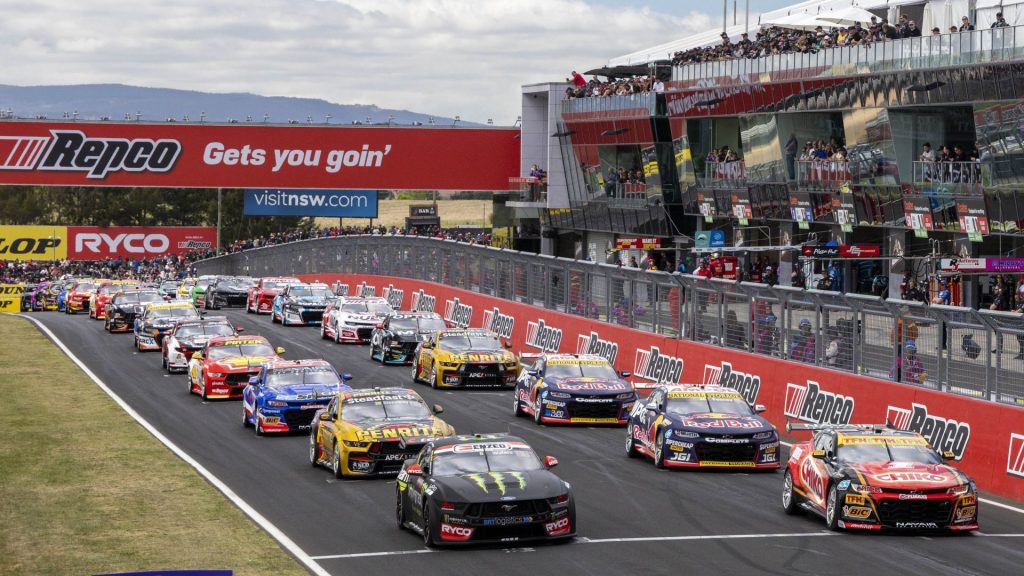
On Mount Panorama’s Conrod Straight, Supercars push beyond 300 km/h, loading splitters, underbody panels and aero components, while the Esses, heavy braking, kerb strikes and contact add their punishment. At Bathurst, composite design, manufacturing quality and repairability come together, and a failure can cost far more than a grid position.
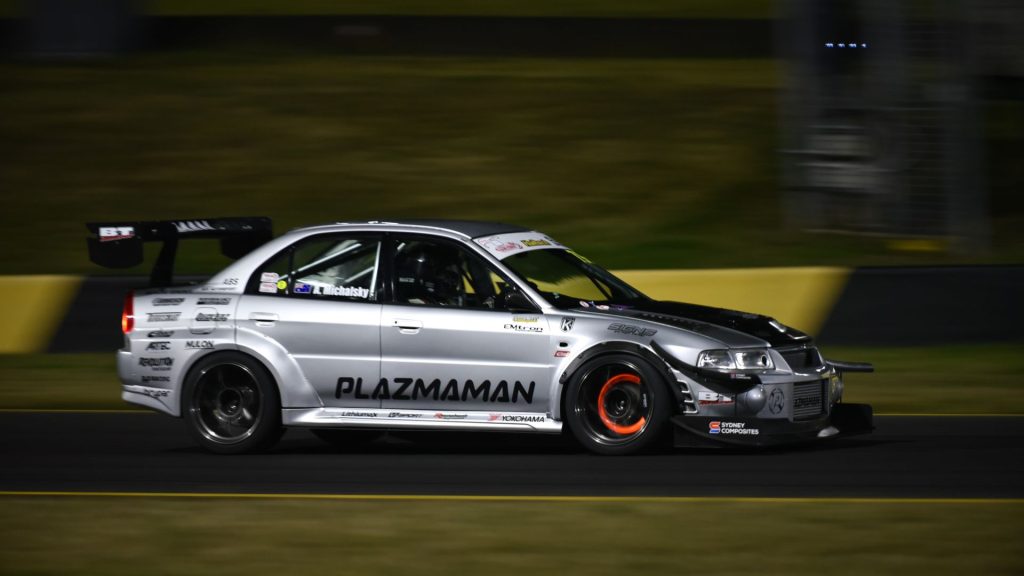
At the World Time Attack Challenge (WTAC), drivers race alone against the clock chasing the fastest lap, and every component has to earn its place. Sydney Composites engineers and fabricates front and rear aero for these cars, from wings to undertrays and diffusers, generating downforce and grip while keeping weight in check.
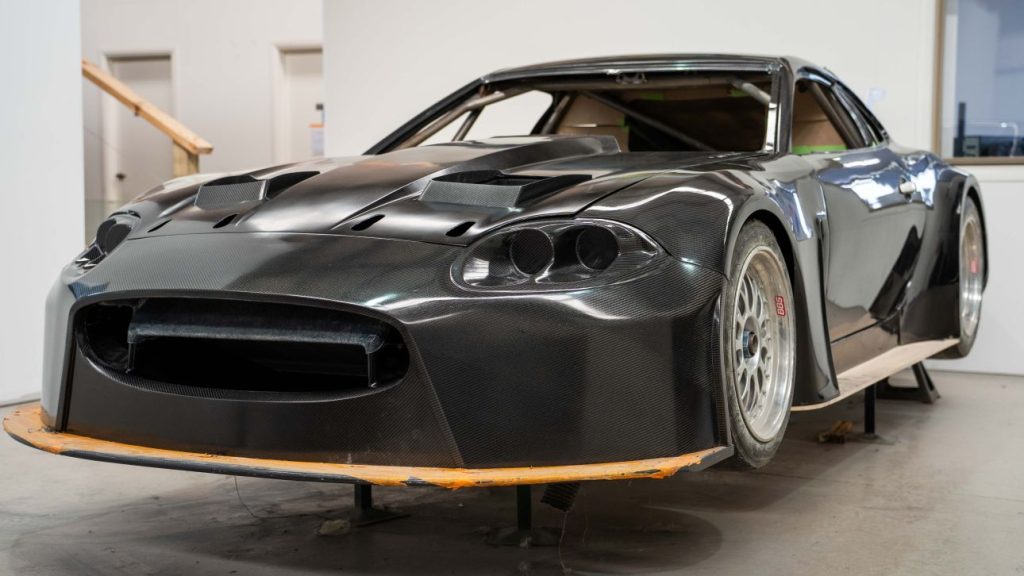
Daniel Young, founder of DY Composites, builds precision composite aerodynamic panels for endurance racing, where tight deadlines meet harsh conditions and failure has immediate consequences. For Young, the reward comes from the link between engineering, manufacturing and competition, and from seeing parts leave the factory floor and perform as intended.
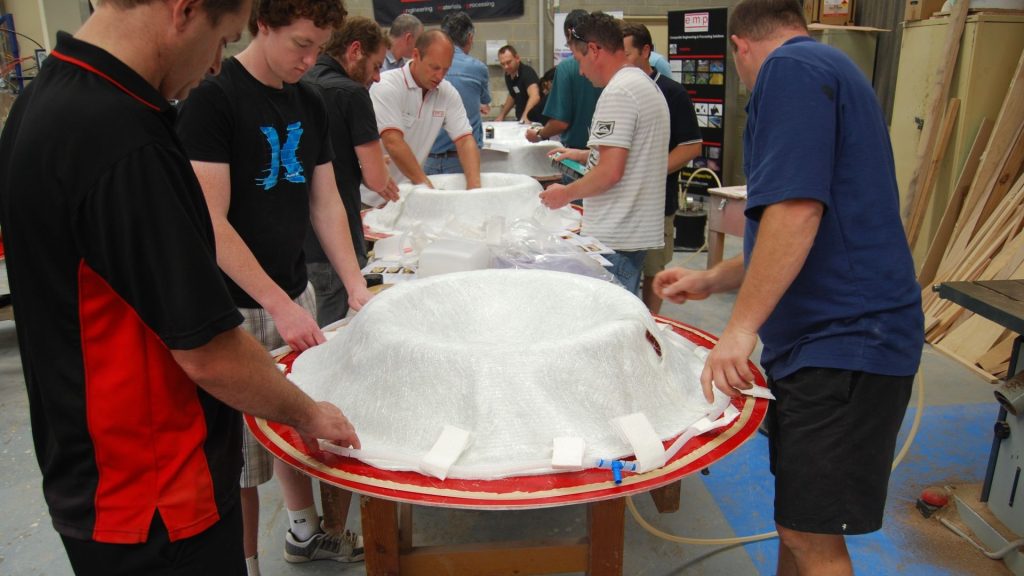
The most direct route into a composites workforce is vocational education and training (VET). A Certificate III apprenticeship combines structured off-the-job training with paid, supervised work in a manufacturer’s own facility, which means the employer trains staff in their own processes from day one rather than hiring blind.
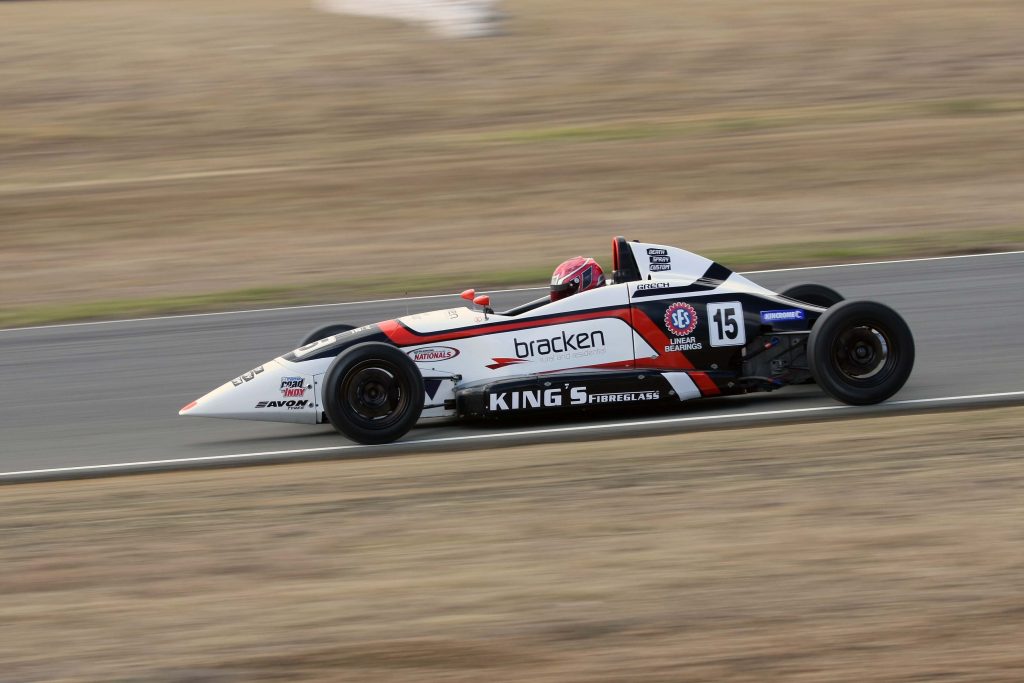
Forty years after Mike Borland built his first Formula Ford, his Braeside workshop is still designing, fabricating and assembling complete race cars in-house. Spectrum chassis now race in the UK, the US, Canada and New Zealand, making Borland Racing Developments a rare example of Australian motorsport manufacturing that competes on the world stage.
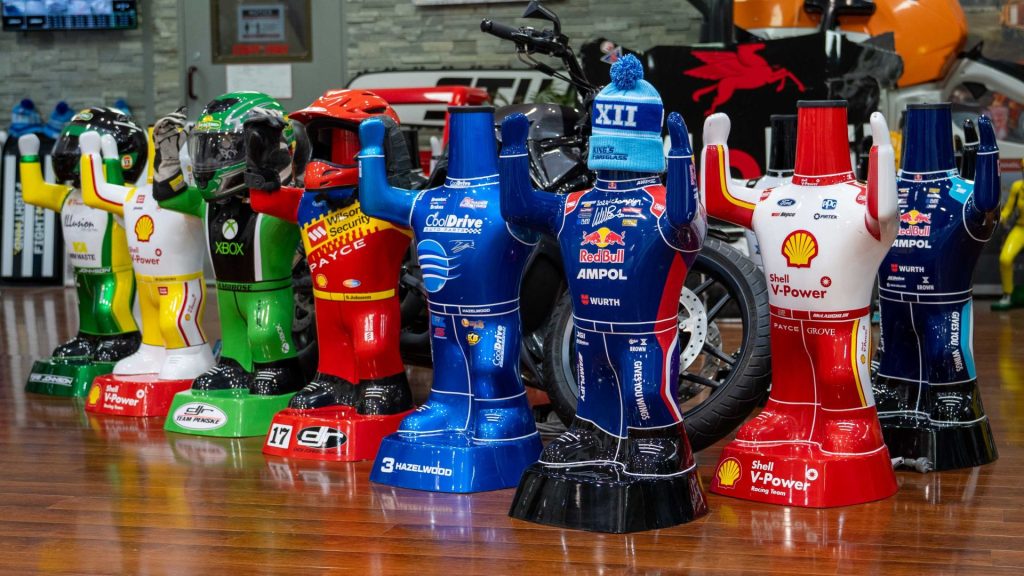
Lined up in rank formation in the King’s Fibreglass showroom is an army of “mini me” fibreglass figures, their true purpose cleverly disguised: race helmet and glove dryers, a necessary piece of equipment at a racetrack.
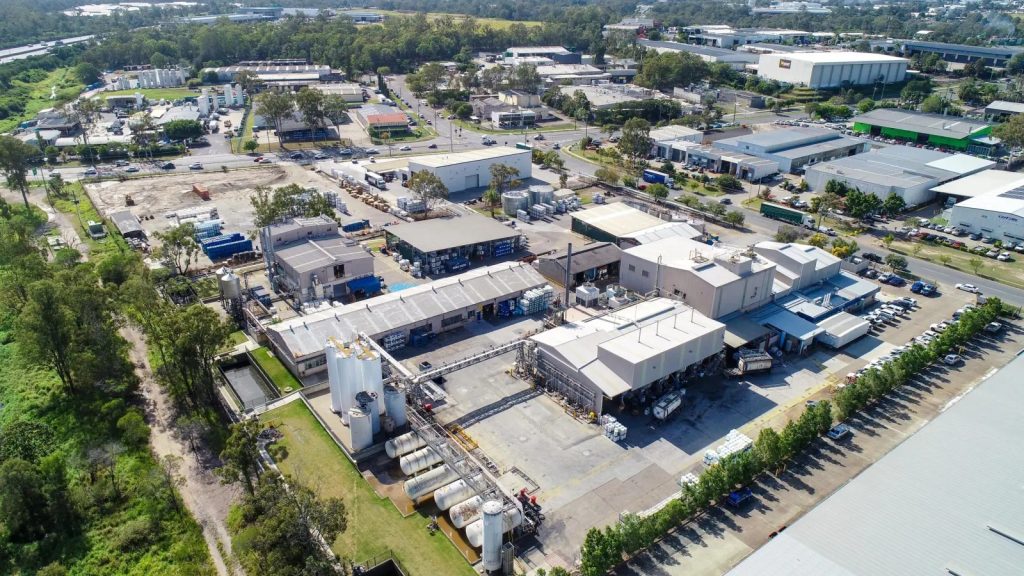
Eighteen kilometres southwest of Brisbane (QLD) is the allnex Wacol site, where resins, gelcoats and flowcoats are produced for sovereign industrial and composite markets.
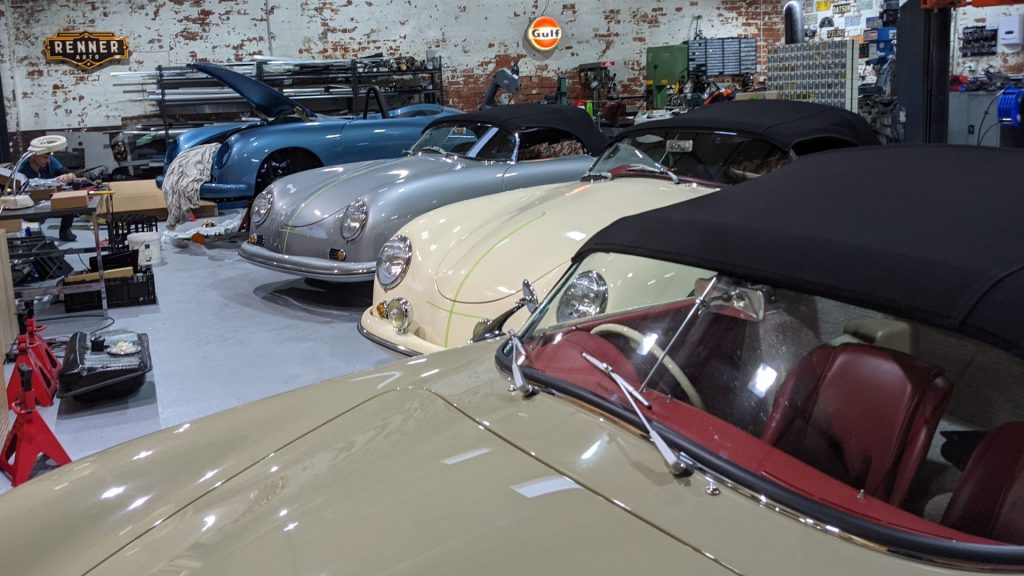
Jason Ferraro and the Renner Auto team
recreate the character and unmistakable shape of the classic Porsche while replacing much of the technology beneath it with contemporary engineering, materials and manufacturing processes
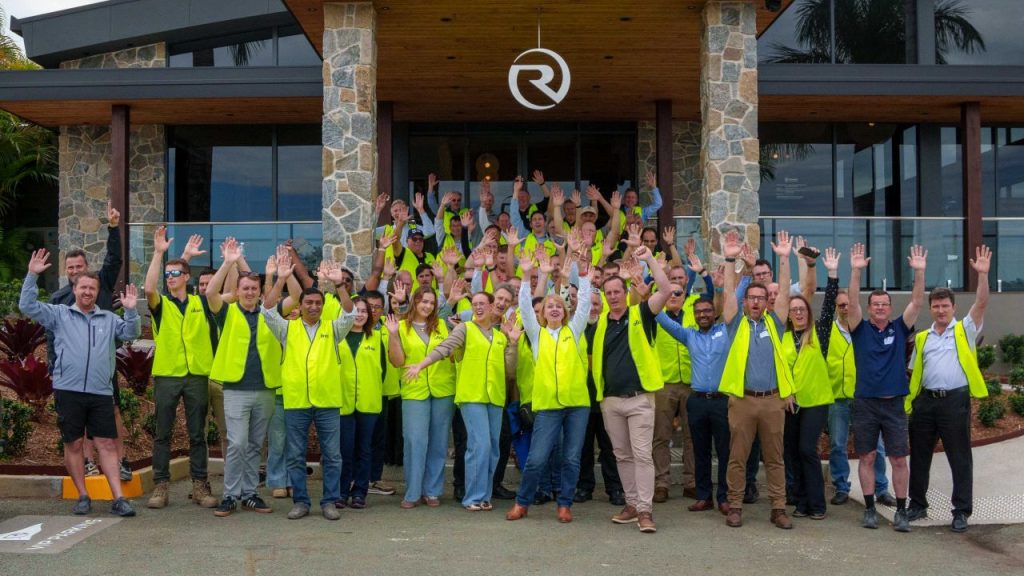
Riviera TECH provided a great day of learning, sharing, and connecting, giving delegates a rare and generous behind-the-scenes look at one of Australia’s largest composite manufacturing facilities.
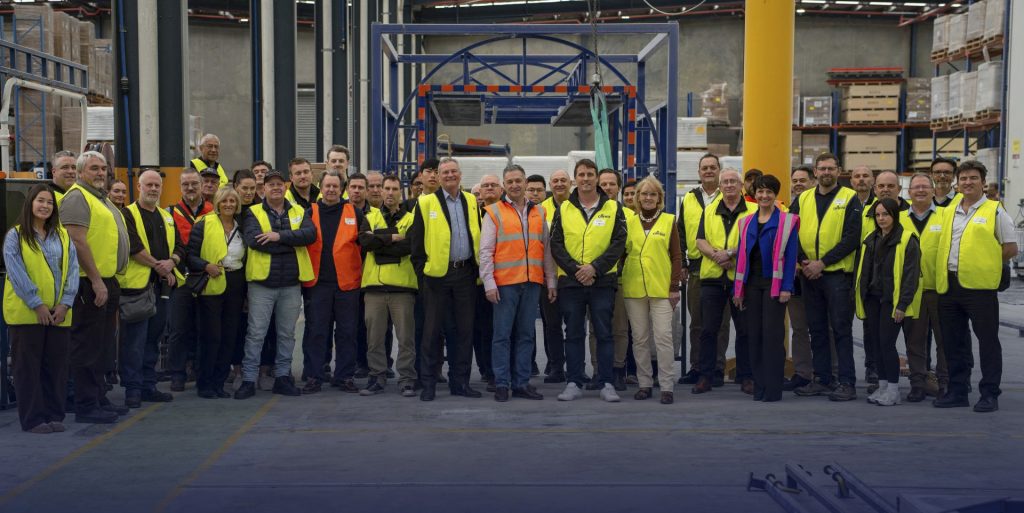
Inside Summertime Pools’ Dandenong South facility, Composites Australia members explored high-volume fibreglass manufacturing, automation, lean processes, and engineering-led design that drive productivity, consistency, and continuous improvement.
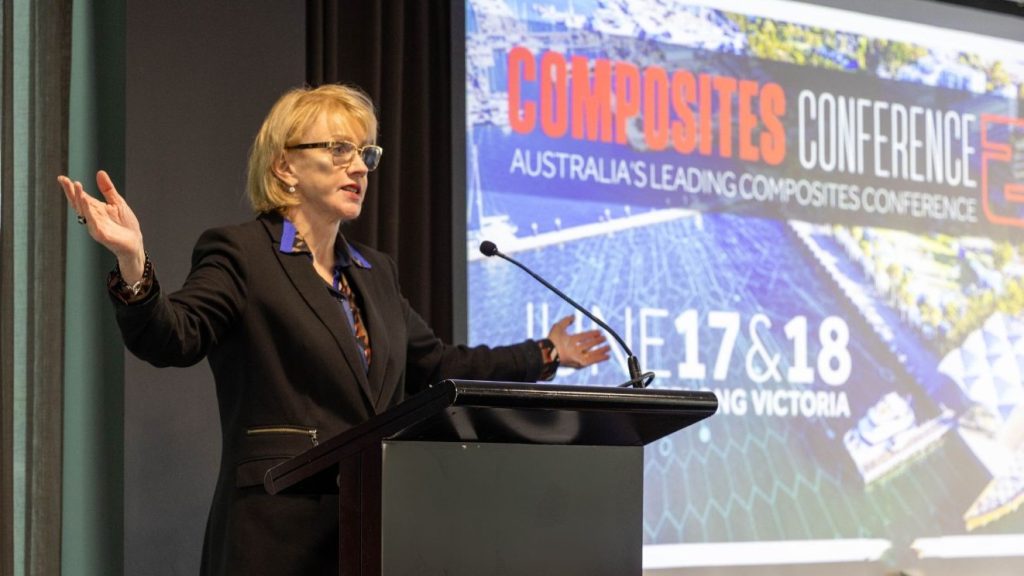
The 2026 Composites Australia Conference
brought together speakers from across the industry to address issues shaping composites manufacturing today and to share candid insights into engineering, strategy, and the operating conditions faced by businesses.
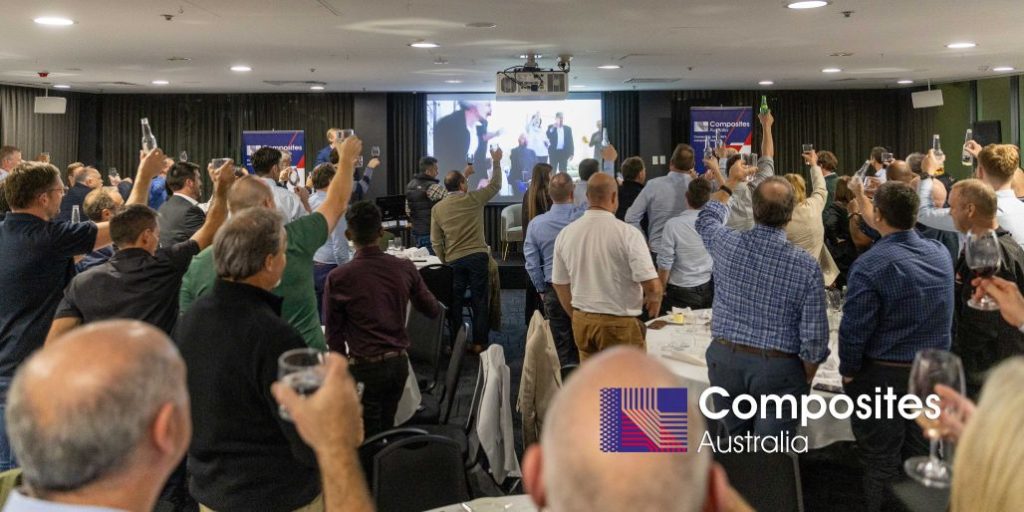
The Lifetime Achievement Award for 2026 was awarded to Owen Hall. Across four decades, Owen shaped Western Australia’s composites industry through fabrication, technical sales, teaching and process development. From Windrush Yachts to South Metropolitan TAFE, he helped build WA’s self-reliant manufacturing culture. Image: The toast to Owen Hall, connected to the conference via ZOOM,

Executive Summary Safe Work Australia has revised the workplace exposure limit for styrene to 20 ppm[1] (8-hour time-weighted average) and 40 ppm (15-minute short-term exposure limit), with implementation scheduled for
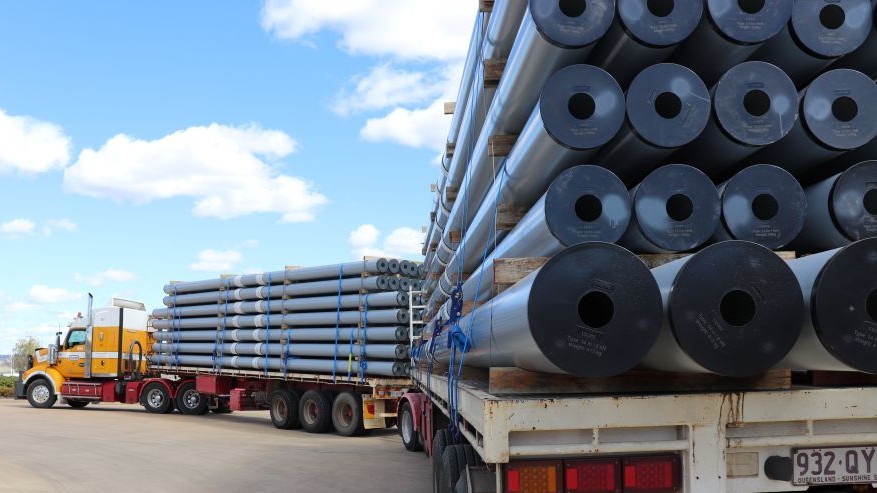
Wagners Composite Fibre Technologies (CFT) has expanded from a three-person start-up into an international manufacturer of pultruded composite infrastructure, supplying electrical crossarms, poles and structural systems across energy and civil markets in Australia, New Zealand, North America, the United Kingdom and Europe.
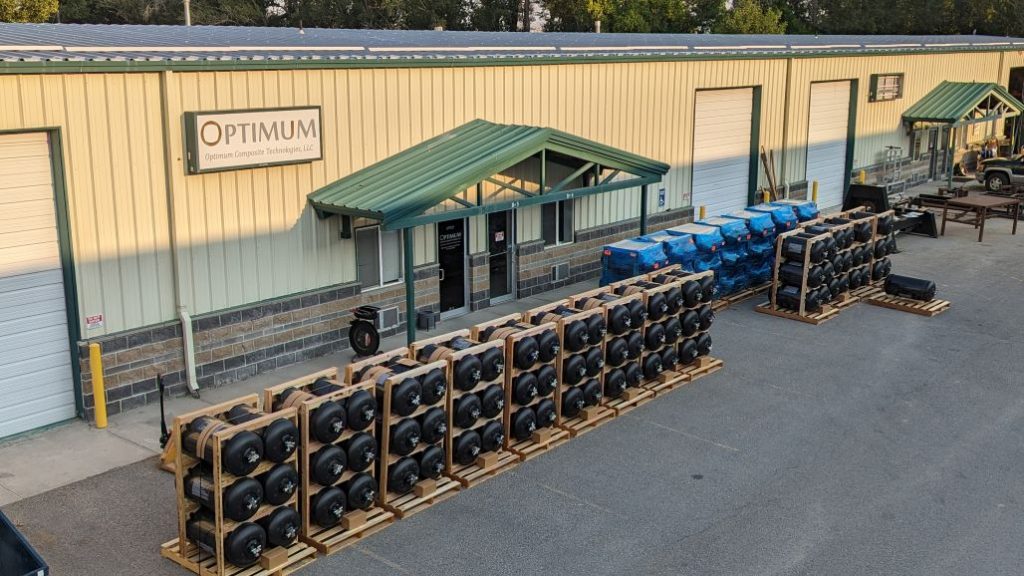
CST Composites has established a United States manufacturing operation through its joint venture, CST Optimum, in Utah, producing filament-wound composite pressure vessels for high-pressure energy applications and positioning Australian-developed filament winding technology within US industrial supply chains.
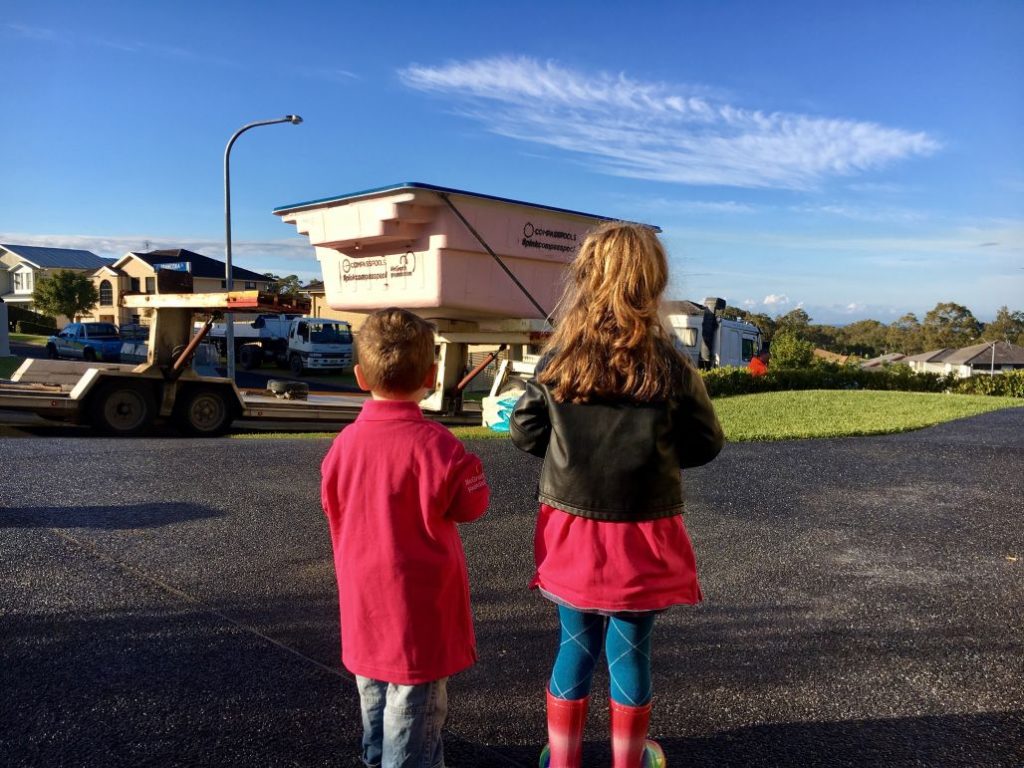
The moment it all begins. For these kids, it’s not just a pool arriving; it’s years of summer memories, laughter and family time taking shape right outside their front door. These values have driven Compass Pools’ founders since 1980.
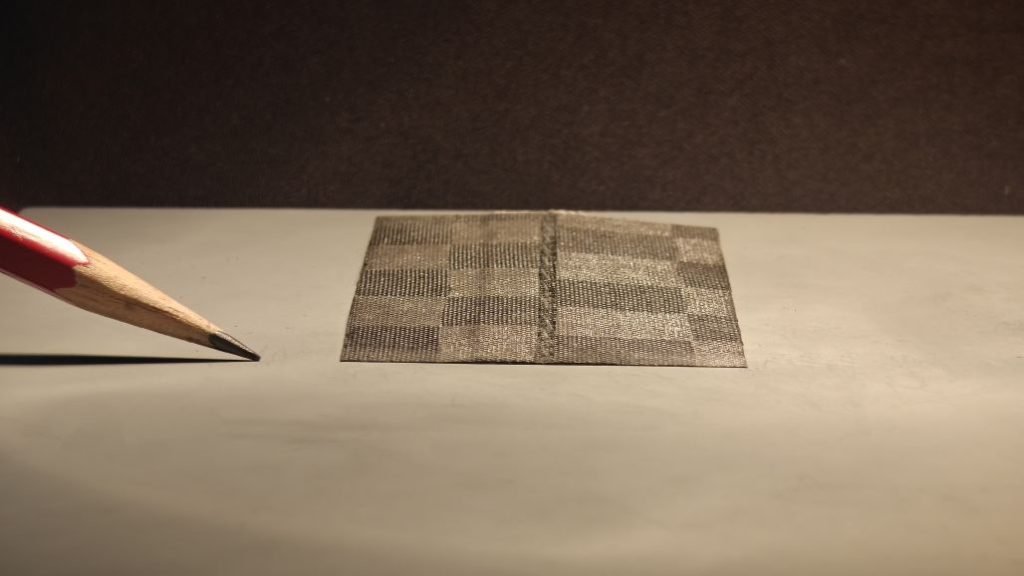
A born-global product, Talon Technology’s co-moulded Carbon–Kevlar hinge replaces mechanical joints with a continuous composite structure, combining rigid carbon fibre laminates with a flexible Kevlar core – a thin, durable and repeatable product.
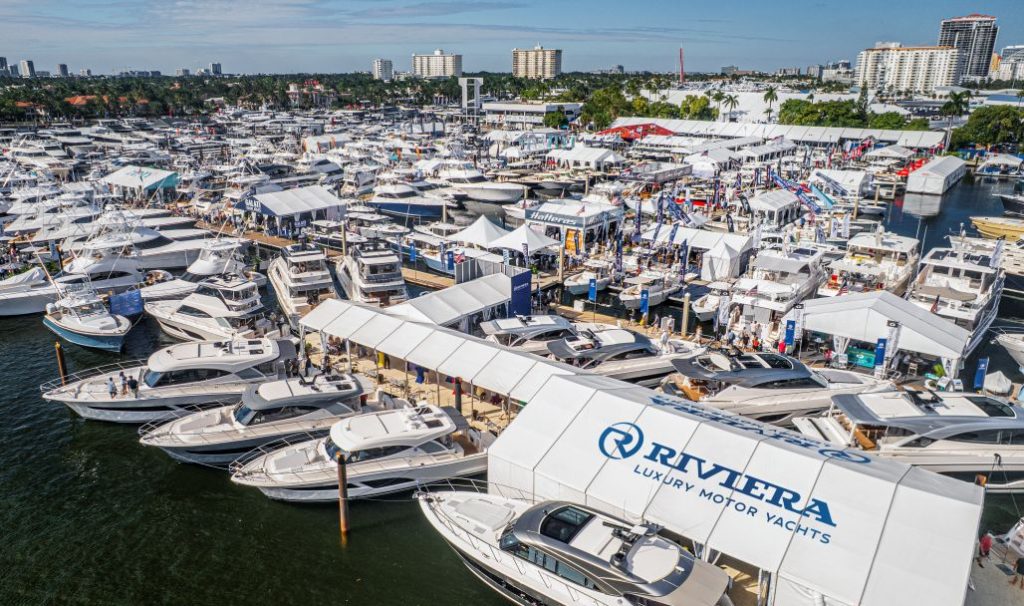
Since its first U.S. export in 1983, Riviera has built more than 6,300 luxury motor yachts, with vessels now operating across the world’s major waterways and contributing to Australian exports for over four decades.
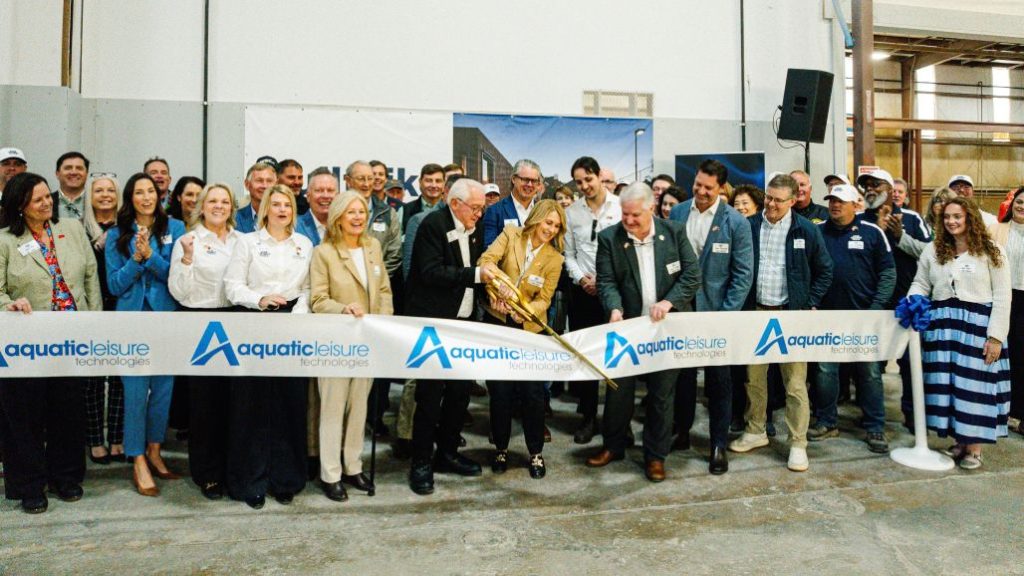
Aquatic Leisure Technologies has established a manufacturing facility on a 22-acre site in Opp, Alabama, operating with the same production systems, material specifications and quality controls as its Australian operations, for the North American market.
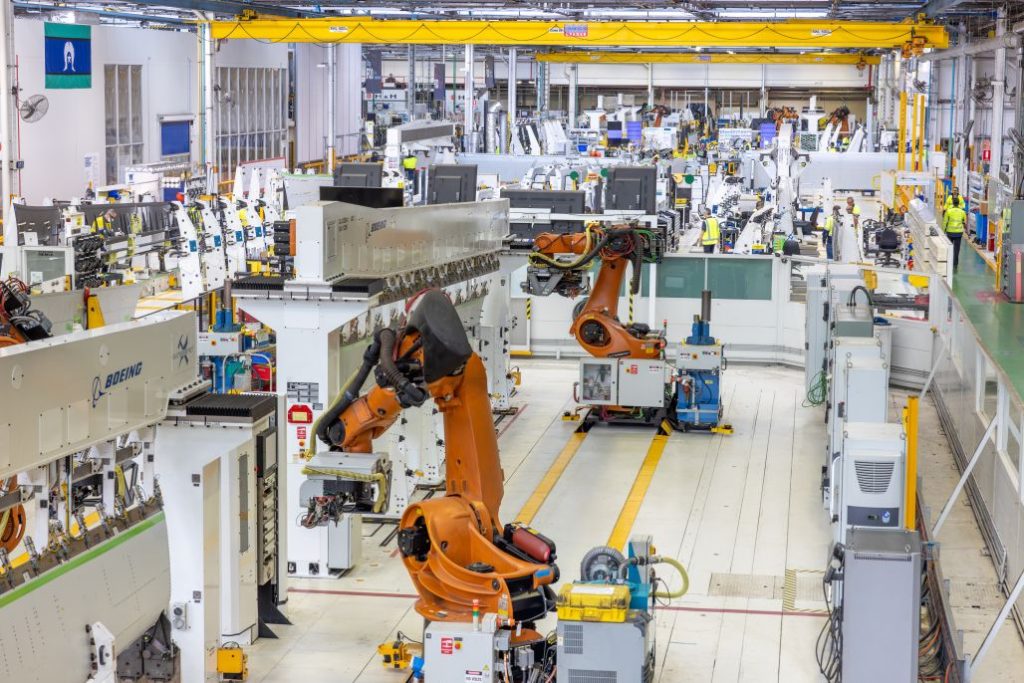
Boeing Aerostructures Australia and Boeing Technology Innovation – Australia form part of Boeing’s integrated international industrial base, supplying Australian-made load-bearing aerodynamic control surfaces for final assembly in the US.
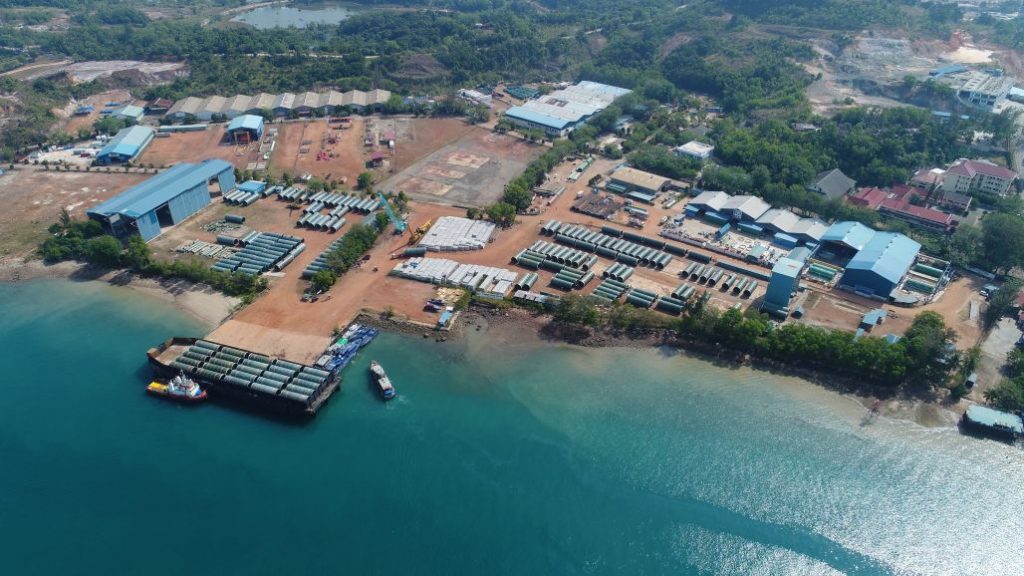
VIEWPOINT: Written by Tony Caristo, Managing Director at RPC Technologies. Internationalising Australian Composites – from Export to Embedded Capability. Working in composites in Australia once began with explaining the material
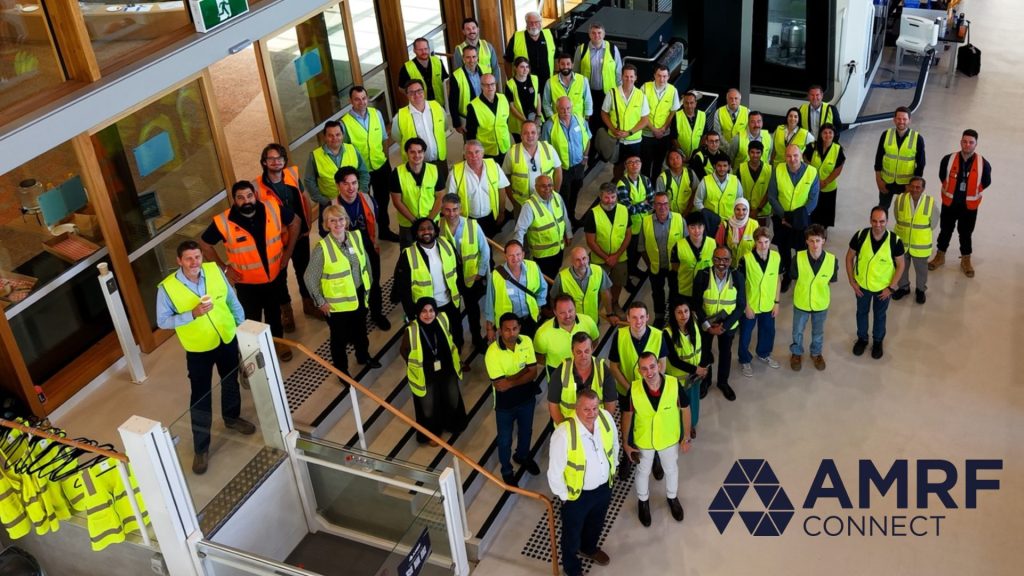
Inside Australia’s newest shared manufacturing facility – Composites Australia and the Advanced Manufacturing Readiness Facility (AMRF) recently hosted a site-based TECH event examining how shared infrastructure is supporting Australian manufacturing.

Australia’s engineering capability is a national asset. Composite engineers, in particular, link advanced materials with practical outcomes, enabling the creation of lighter, stronger, and more sustainable structures. Their expertise supports exports, builds sovereign capability and opens new frontiers.

Gurit’s Asia Pacific team provides composite engineering, testing and modelling across sectors ranging from America’s Cup yachts to electric ferries and bridges. Supported by one of the region’s most comprehensive testing facilities, the team advances global projects with lightweighting expertise, advanced materials and structural engineering design for demanding applications.

From bushland to coastlines, civil and marine infrastructure demands materials that endure fire, UV, termites and seawater. Wagners Composite Fibre Technologies has grown from crossarm innovators to a major composites manufacturer advancing precision engineering, automation, and fire-rated composite solutions for critical infrastructure.

Advanced Composite Structures Australia (ACS-A) has evolved from CRC-ACS into an ISO 9001-certified engineering and manufacturing firm. Delivering composites solutions for aerospace, defence, marine, energy and transport, ACS-A is expanding into a new Melbourne facility while strengthening sovereign capability, advancing innovation, and supporting future engineers and technicians.

Founded in 1950 in Helsingborg, Sweden, DIAB has been a pioneer in composite core materials for more than six decades. Today, the company serves customers in over 30 countries through its global manufacturing network and its Composites Consulting Group (CCG) technical teams.

Australian engineering is globally recognised through three accredited categories, with Chartered status marking the profession’s highest credential. As technologies advance, Australia will need more composites specialists to drive future applications in advanced manufacturing and design.
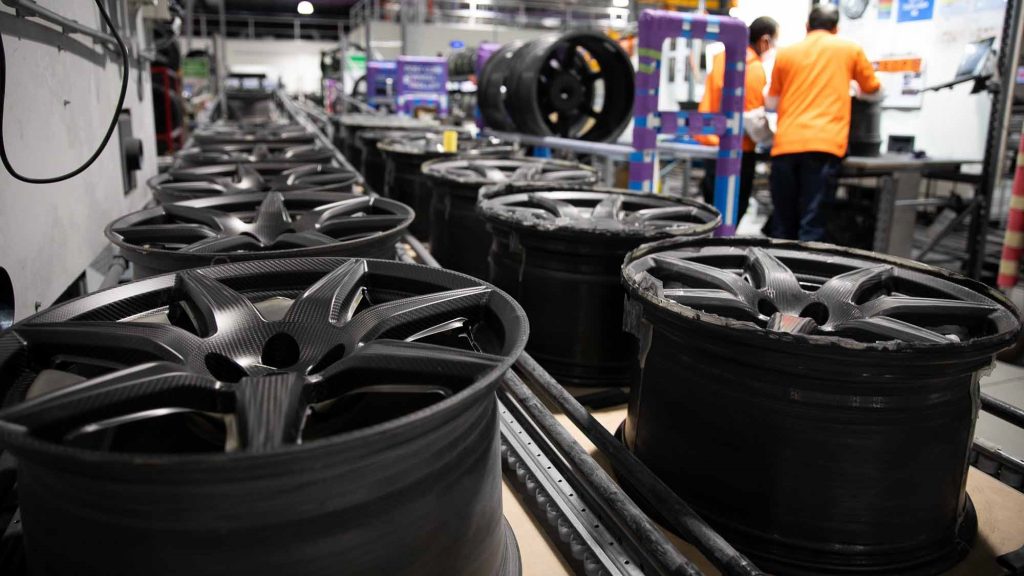
From the muscle of Ford’s Shelby GT350R, to the precision of Ferrari’s 488 Pista, to the scale of the Range Rover Sport SV, Carbon Revolution’s engineering journey demonstrates how wheels can embody a car’s unique essence in parallel with optimising performance.

Few names in Australia’s composites sector carry the enduring weight of Dennis Southam. Founding Dennis Southam & Associates (DSA) in 1991, he established an engineering practice specialising in fibreglass-reinforced plastics for aggressive environments. Now part of Novafast Holdings, DSA delivers design, inspection, failure analysis and asset management services across defence, mining, wastewater, water, energy and oil and gas.
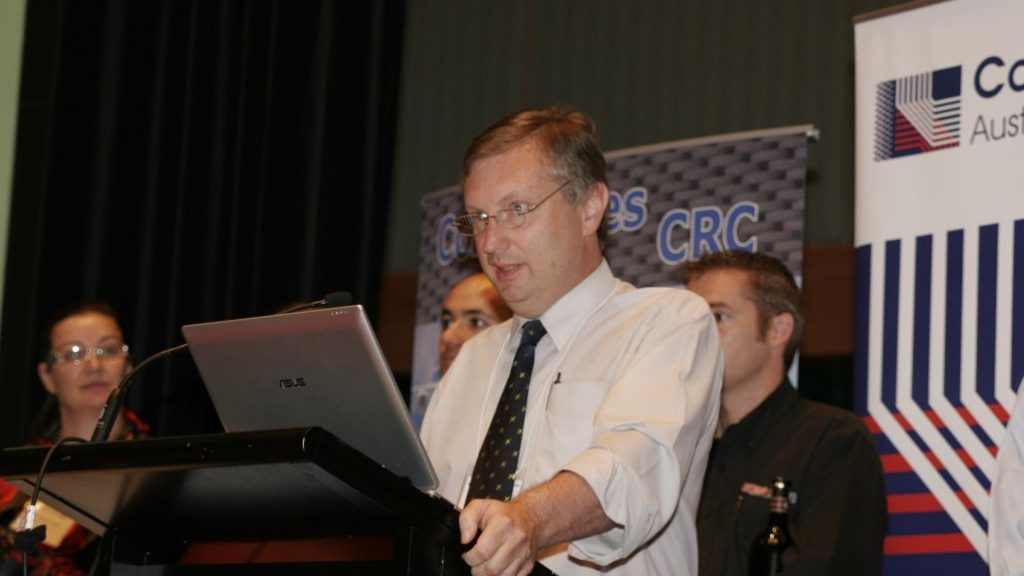
Prof. Murray L. Scott, Chair of ACS Australia, is a leading international composites authority. He served as President of the International Council of the Aeronautical Sciences, chairs the Joint Board for Aerospace Engineering, and was recently awarded Engineers Australia’s rare Honorary Fellowship. He is also a Fellow of the American Institute of Aeronautics and Astronautics.
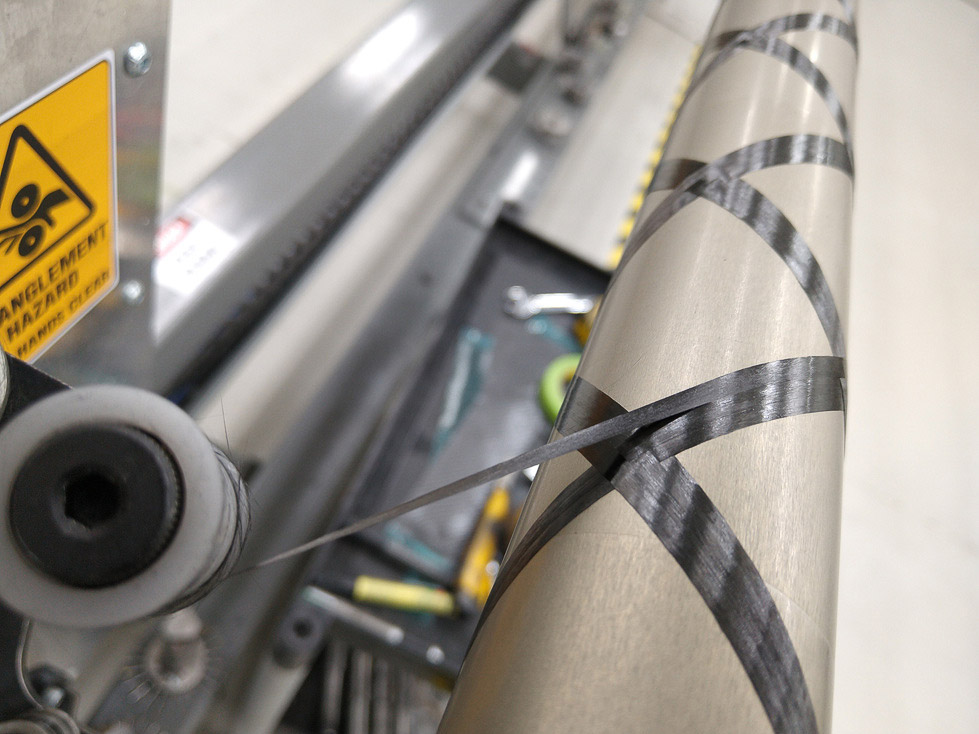
In an industry where tolerances are measured in fractions and repeatability defines reliability, CST Composites has built sovereign capability in one of the most exacting areas of advanced composites: carbon fibre towpreg.

For 45 years, ATL Composites has engineered advanced materials for high-performance boats, vehicles and structures—manufacturing proprietary epoxies and DuFLEX® panels, providing engineering support from Queensland, partnerships in Europe and USA.

From racing yachts slicing through Sydney Harbour to tactical vessels tested by the U.S. Marine Corps, Eric Desjardins has spent two decades at the forefront of high-performance crafts and composites engineering.
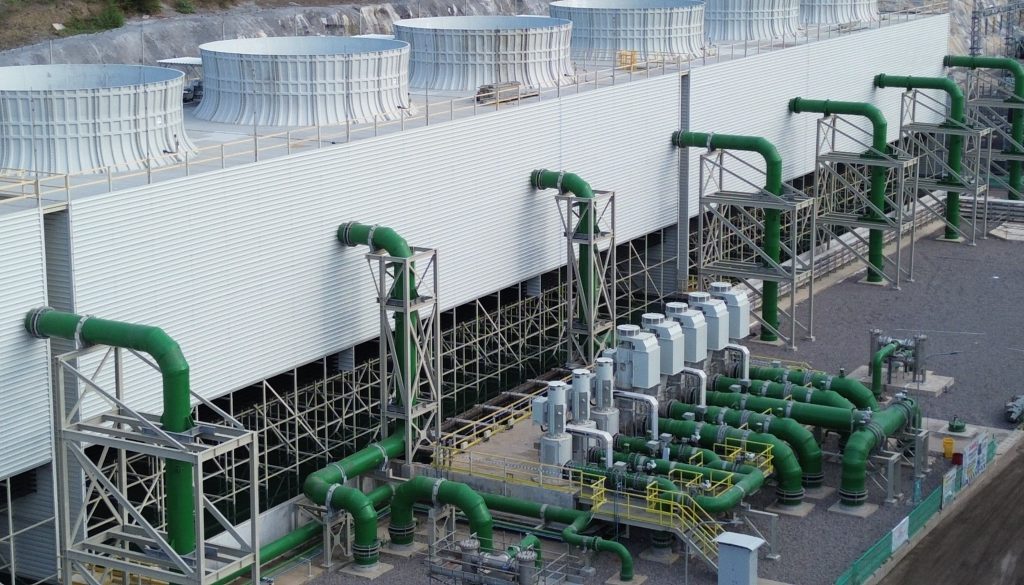
RPC Technologies delivers advanced composite solutions across defence, transport, energy, water and wastewater. With one in five staff holding engineering degrees, RPC combines technical depth with practical expertise to set new benchmarks in materials and manufacturing.
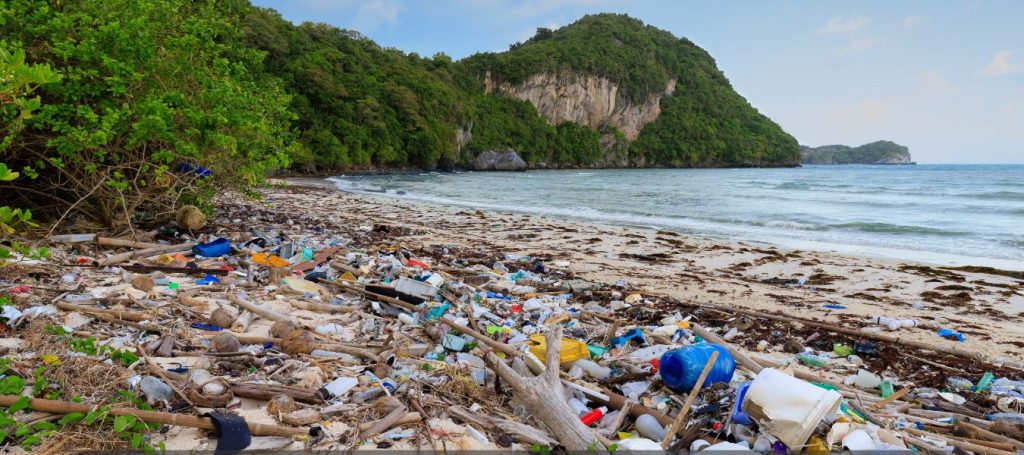
Powerful equatorial and regional currents and trade winds converge with complex tidal flows that flow into the wider Pacific fouling otherwise pristine coastlines with plastic waste.

A once-declining population of eastern ospreys in South Australia is showing remarkable signs of recovery thanks to a conservation initiative that combines cutting-edge Fibre Reinforced Polymer (FRP) design and community and government collaboration.
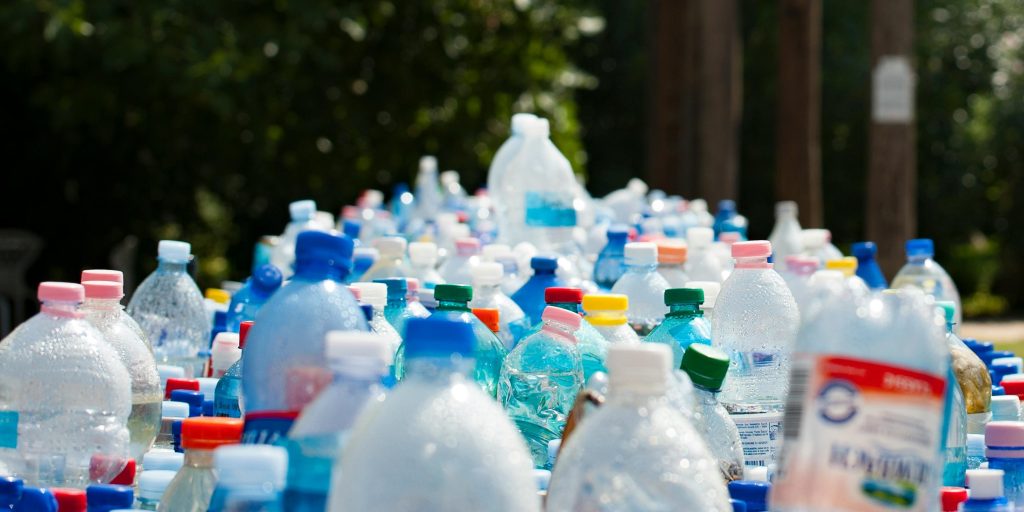
This article draws on insights shared by David Stevenson, Product Line Manager – allnex Composites, during his presentation “Green Revolution in Materials Science: Pioneering Sustainable Resins from Recycled Sources” at the 2025 Composites Australia Conference. Image by mali maeder

Riviera’s GRP seagoing 68 and 72 luxury sport yacht models are designed for adventurers exploring the Australian coast, the South Pacific and beyond.

Riviera trains around 150 apprentices across 10 trades, from composite technology and marine craft construction to diesel fitting and cabinetmaking.

Malibu Boats Australia Pty Ltd has been manufacturing high-quality water ski and wakeboarding boats—or ‘towboats’—in Albury, New South Wales, since 1995.

Maritimo’s magnificent bluewater, long-range cruising vessels provide a seamless blend of performance, luxury and adventure, delivering Australian craftsmanship to the world’s most sought-after cruising destinations.

In 2006, Darren Withoos and John Gysberts founded Status Luxury Houseboats with a shared ambition to redefine luxury houseboat manufacturing, creating floating penthouses that set a new standard in the industry.

Steber International is leveraging the environmental benefits of electric propulsion while pioneering a balanced approach to electric and diesel power.

Next year, Cruise Craft will celebrate 80 years in business, marking its legacy as one of the oldest family-run dynasties in Australian boatbuilding.

Australia’s recreational boating industry is a vibrant tapestry woven from tradition, innovation, community engagement and economic significance, poised to navigate a promising and prosperous future as the nation continues to cherish and invest in its waterways.

At the recent AGM, Composites Australia announced significant leadership changes, with Genelle Coghlan and Martin Nikolas stepping down as President and Vice President, respectively, while remaining on the Board. The organisation welcomes Lynden Vikingur as the new President, Rohan Gillmore as Vice President, and new Board members Tony Caristo and Nathan Howell.
Republished with gratitude from the www.eucia.eu | The value of composites to the circular economy

Step inside the industrial building of Creature Technology Company’s (CTC)
headquarters, and you’ll be transported to a place where prehistoric creatures come to life most impressively in movement,
sound and emotional presence.

BlackBar™, developed by Beyond Materials
Group, is a Glass Fibre Reinforced Polymer
(GFRP) rebar engineered as a cost-effective, high-performance alternative to traditional steel rebar.

In a remarkable feat of engineering and composites fabrication, an AC Sentinel tank, Australia’s first is preserved for posterity.

There’s nothing quite like the exhilaration of a waterslide. The twists, the turns, and those fleeting moments of weightlessness provide a thrilling experience for adventurers of all ages. Whether you’re hurtling through a high-speed tunnel of water or enjoying a gentler ride, waterslides are a staple of summer fun that never gets old.

Bisley Australia, a privately owned industrial products distributor, is now the agent for PureGRAPH® graphene, a range of graphene nanoplatelet additives produced by ASX-listed First Graphene.

Generally, a reef can take anywhere from 10,000 to 30 million years to fully form, with many of today’s coral reefs beginning 5,000 to 10,000 years ago, after the last ice age. Mangrove forests are equally ancient, dating back to the late Cretaceous–Palaeocene epoch. Reef Design Labs designs, prototypes, and manufactures unique coastal solutions to restore reefs and protect shorelines.

In 2020, Aquatic Leisure Technologies (ALT), Australia’s largest swimming pool manufacturer, released the world’s first commercial range of graphene enhanced GFRP (Glass Fibre Reinforced Plastic) swimming pools.

Composites Australia and its members were featured in a four-page article in the recent JEC Composites Magazine – Special Issue on Composites Sustainability. The article explored how composite technologies are critical for supporting Australia’s unique environment and infrastructure needs in a sustainable manner.

Athletic shoes are, at their core, a composite product, made from a variety of materials, each selected for its unique properties to enhance comfort, durability, and performance.

Colan Australia, the country’s sovereign manufacturer of engineered industrial textiles, recently celebrated its 70th anniversary with a gathering of the composites industry at its Huntingwood headquarters.

At a time when fibreglass technology was still in its infancy in Australia, two enterprising brothers started to make sheeting from their garage. This humble beginning marked the genesis of what would become Australia’s largest and most experienced fibreglass and polycarbonate roof sheet manufacturer and distributor, transforming how buildings harness natural light.

With an estimated 1.6 million new homes expected to be built by 2034, driven by population growth and urban expansion, Australia’s residential market provides a compelling opportunity for the continued widespread application of composite products and building materials for external and internal applications.

Tucked away in Flinders Bay along Augusta’s shoreline in Western Australia’s wild southwest lies a sheltered and secluded cove known as Granny’s Pool. Overlooking this serene harbour is the Boathouse, an architectural marvel with its unique design and construction approach, a testament to advanced marine industrial craftsmanship

Composites Materials Engineering is continuously developing and innovating its products, drawing on its established strengths and the materials and technologies it has been using for many years. The unique properties and production efficiencies of Sheet Moulding Compound make it well-suited for the requirements of large-scale construction projects, guaranteeing consistent quality and performance for various applications.

Eco Benchtops uses composite technology to transform recycled glass from local council recycling programs into stunning, durable residential and commercial benchtops. Driving circular economy, each formed slab incorporates approximately 750 recycled glass bottles.

Committed to innovation in bathroom ware and sovereign manufacturing for nearly 50 years, Bathroom Products Australia has built a comprehensive range of shower bases utilising 250 moulds for size and style options, while offering 200 colours.

Hydrotherapy, with its roots tracing back to ancient civilisations, has been utilised for centuries as a natural remedy for various ailments. Halo Spas’ range of fibreglass spas brings the ancient practice of hydrotherapy into the home.

This article delves into the effects of these as MEKP and Cumene Hydroperoxide catalysts on the infusion process, highlighting why Cumene Hydroperoxide is a worthy choice.

Sydney-based firm CST Composites, known for its unique filament winding technology, has made Australian-made pre-impregnated tow, or “Towpreg,” available to the broader composites manufacturing industry.

Gurit is supplying the growing need in the building, construction, architecture and furniture industries for high strength, lightweight, recycled and recyclable materials with longevity and design freedom characteristics.
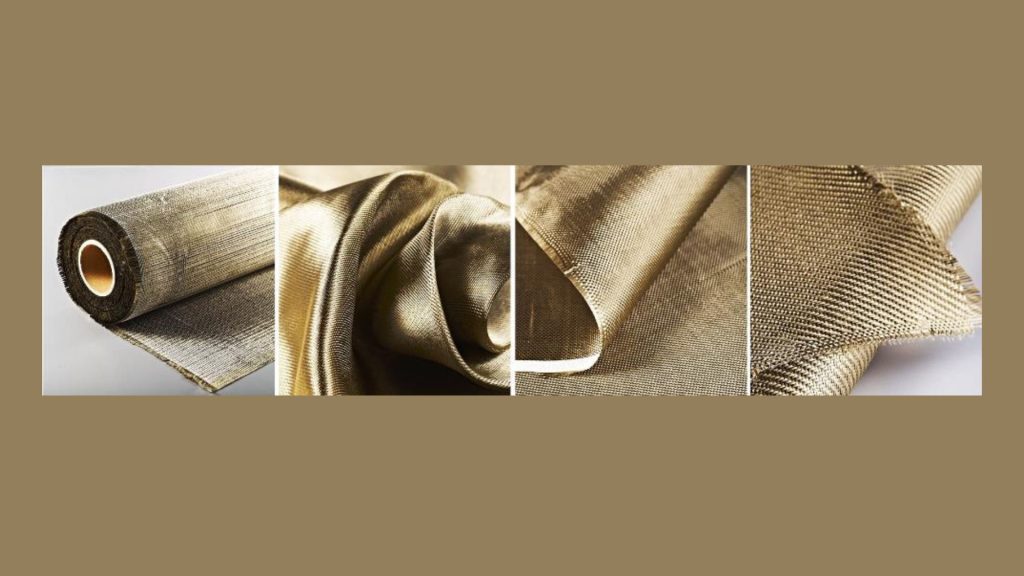
Basalt fibre—an eco-conscious alternative to conventional reinforcements—has been steadily gaining traction across various industries, including automotive, marine, construction, and aerospace. Derived from naturally abundant volcanic rock, it converts raw basalt into high-performance fibres without relying on petroleum or synthetic additives

Felco Manufacturing based in Toowoomba, Queensland, stands as one of the most experienced and respected manufacturers of composite bulk liquid transport tankers in Australia. For over 40 years, it has produced and deployed hundreds of tankers for use in road watering and dust suppression operations, as well as for the bulk transport of heavy, dense and corrosive liquids.

The core of Marky’s business focus has been on serving the transport industry with quality and efficiency for many decades. From bonnets and sleeper boxes to dash assemblies and engine covers for a range of transport manufacturers including Mack, Volvo, Iveco, Ford, Western Star, Navistar, and Cat Trucks, Marky produces products that marry materials, form and durable function.

MaxiTRANS, renowned for its extensive portfolio of trailer brands including Freighter, Hamelex White, Maxi-CUBE, Lusty EMS, Trout River and AZMEB, stands as a foundational mainstay within Australia’s road transport history. These brands, each with its unique heritage tracing back to various decades last century, are united by their origins in the pioneering efforts of their founders who had a collective dedication to manufacturing in Australia.

With a design and manufacturing legacy spanning over six decades, the Bolwell Corporation continues to shape the future of the automotive and transport industries, reinforcing its position as an icon of Australian entrepreneurial spirit and engineering excellence. The company’s workforce is justifiably proud of their involvement with the 2023 Australasian Truck of the Year award.

The Truck Industry Council report titled ‘Modernising the Australian Truck Fleet’ estimates the value of the Australian new truck market at around $4.5 billion.

Fuel price fluctuations pose a significant challenge for the trucking industry to overcome. Improving a truck’s aerodynamics directly enhances its efficiency and fuel savings by mitigating aerodynamic resistance, a force that escalates exponentially with speed. This resistance is a primary consumer of energy, notably affecting the fuel economy of heavy-duty trucks on motorways

Prior to the widespread implementation of automated speed camera systems in the late 1980s the trucking landscape was dramatically different. Described by Chris Ryman as the “Wild West,” trucks, colloquially known as ‘Bitumen Boeings,’ often reached speeds up to 180 miles per hour (289.68 kilometres per hour), navigating the vast and often lawless highways of Australia.

Two colossal sheds now command the landscape, standing tall as they overlook the pristine waters of the Indian Ocean. This is the new site of Dongara Marine, recently relocated to Geraldton.

Edencraft carries a legacy of trailer fishing boats that traces back over sixty years, beginning in Miami in the 1960s. The company has become a staple of Australian fishing folklore, with the 233 Formula Classic boasting a timeless hull design known worldwide for its endurance and performance. Image courtesy of Tom Cameron, Wicks Estate Media.

The Whiskey Project Group (TWPG) has secured a significant contract valued at US$12.5 million (approximately AU$19.4 million) with the United States Defence Innovation Unit to supply a fleet of tactical watercraft for use by the United States Marine Corps (USMC).

The commercial workboat sector is undergoing a transformative shift as operators increasingly seek out advanced materials to improve transport efficiency by reducing fuel consumption and greenhouse gas emissions. Images by Simon Hoyle, Southlight for WEB

From its boat building hubs in Mornington and Yaringa Boat Harbour, southeast of Melbourne, Hart Marine builds mighty boats designed for the speed, agility and stability required to navigate both Australian and international waters with industrial purpose.

Bluefin 9 autonomous underwater vehicle onboard the Mine Counter Measure Support Boat at HMAS Waterhen in Sydney, New South Wales. Courtesy of Royal Australian Navy Photographer: LSIS Daniel Goodman.

Link Composites’ product portfolio includes lightweight sandwich panels, infused panels, fibreglass parts, extrusions and laminates.

Plastool specializes in producing high precision components, tooling, and 3D CNC machining solutions.

Achieving the status of ‘Tier 1 OEM supplier’ at the performance and premium end of the market, Carbon Revolution has climbed to the top of the global automotive supply chain pyramid in less than two decades.

Wheel evolution spans over five to six millennia, with its humble inception in the 4th millennium BC.

A structural PET foam core crafted from recycled post-consumer PET bottles.

Since the creation of the touring caravan, construction has undergone significant developments over time. In the early days, caravans were constructed with a mix of wood paneled sides and treated canvas made by Australian mills.

First published June 2012:The dictionary defines an opportunity as an “advantageous combination of circumstances”, and that’s exactly what evolved for LSM Advanced Composites when the project design and management teams for James Cameron’s submersible DEEPSEA CHALLENGER approached the Toowoomba based company to manufacture the carbon fibre internal lining of the Pilot Sphere.

First published June 2012: “I’ve always dreamed of diving to the deepest place in the oceans. For me it went from a boyhood fantasy to a real quest…” James Cameron

It’s a wrap. The Composites Australia conference held in Adelaide in early June at Morphettville was a great success. Thank you to everyone who attended, presented, sponsored and exhibited. You made the event. Australian sovereign manufacturing was palpable during our tour of the mighty RPC Pipe Systems Pty Ltd.

A Futuro house is a round, prefabricated house designed by Finnish architect Matti Suuronen, of which fewer than 100 were built during the late 1960s and early 1970s. The shape, reminiscent of a flying saucer, and the structure’s airplane hatch entrance has made the houses sought after by collectors. Importantly, it was an early use of fibreglass technology. Photo Credit: Mona/Jesse Hunniford

Operating from its factory in Moolap, just two hours south west of Melbourne, Dulhunty Poles is a manufacturer and distributor of a unique range of innovative engineered geopolymer cement poles for a raft of applications, but particularly for utility power.

Fibreglass, or glass fibre reinforcement, is possibly the ultimate reinforcement material ever developed. Now, ninety years after its invention in 1932, I doubt whether its creators would have imagined the breadth of materials and applications in which fibreglass would be used.

A prosaic and mundane necessity, access covers have played an important role in civil works projects for centuries, protecting a world of pipes, wires, conduits and drainage systems below our walkways, driveways, roads, freeways, docks, wharfs and runways, while providing convenient access for maintenance workers. As technology and community expectations and needs have grown, the humble access cover has until recently struggled to evolve.

Australia’s electricity networks extend about 918,000 km with more than seven million power poles – most of which are above ground and extend deep into the bush. These sections can be hard to access, expensive to maintain and are easily severed from the main grid by natural disasters.

If you take public transport, pound the pavement or even simply cross the street for your morning coffee, you will have noticed the distinctive tiles with raised spots and strips imbedded into the asphalt or concrete of public walkways.

Beneath New Zealand’s largest city, magic is happening: Watercare, the city’s water utility is building a 14.7km underground wastewater tunnel from Mãngere Wastewater Treatment Plant, across the Manukau Harbour to the central city. It’s the largest and most complex wastewater infrastructure project in New Zealand history

According to Dale Timms, General Manager and Director at Envirotank Pty Ltd, product and material acceptance of fibreglass composite technology for underground tanks took close to 30 years.

Technology driven and highly-regulated, vaccine manufacture is a challenging process manufacturing industry. Fibreglass reinforced plastic (FRP) tanks play an important role in process manufacturing by providing safe, non-combustible, non-corrosive storage of raw material inputs, formulated outputs, waste, and effluent.

The Kwinana Nickel Refinery located south of Perth, Western Australia (WA), is the ‘first of its kind in Australia producing premium nickel sulphate used to make electric vehicle batteries. Its industrial equipment required to process the mineral ore is performance and material intensive – built to exacting engineering specifications.

Mining equipment is expected to operate for many decades with ongoing integrity, reliability and productivity in the region’s desert climate that can drop to below zero and rise close to 50 degrees.

Fibreglass was a material to chase dreams with and gave birth to a number of auto start-ups which manufactured a range of performance muscle cars through to jolly cheap run-abouts from the early ‘60s to late ‘70s.

The Purvis Eureka is a sports car that was produced by Purvis Cars at Dandenong in Victoria from 1974 until 1991 after Allan Purvis had negotiated the rights to license building the Volkswagen Beetle-based sports kit car from its UK designer.

Marketed as ‘A little American influence with a lot of Australian ingenuity’, the ‘Perentti’ sportscar was designed and built by Revolution Fibreglass in the outer Melbourne suburb of Bayswater.

Campbell Bolwell’s pioneering work moulding fibreglass components was first forged on making replacement panels for a 1937 Ford V8 sedan he’d bought for £50, after his brother had taken it for a serious burn one afternoon.

At its peak, South Australian based Elfin Sports Cars was the world’s second largest producer of racing cars.

Considered by many as the most successful attempt to design, manufacture and market a minicar in Australia, the Goggomobil Dart was an Australian-designed fibreglass two-seater open sports car that went on sale in 1959.

The Zeta is a marque of automobile that was produced in Australia from 1963 to 1965 by South Australian manufacturing company Lightburn & Company Limited. It was a large industrial company employing over 500 people, that manufactured a raft of products from the “Lightning” brand concrete mixers, washing machines and spin driers, wheelbarrows and boats.

This 58th edition of the Connection magazine celebrates International Women’s Day on 8th March 2022 by featuring articles on women leaders in the composites sector.

In recent years, we’ve speculated about the commercial benefits in space, space travel and associated opportunities. This ripping article by Dr Nisa Salim, the Vice Chancellor’s Initiative Research Fellow at

Earlier this month, his Highness Sheikh Khalid bin Mohammed bin Zayed Al Nahyan, member of the Executive Council of the Emirate of Abu Dhabi and head of the Abu Dhabi

ATL Composites (ATL) was founded on the transformative use of liquid epoxy formulations for timber boats and, subsequently, for a wide range of liquid and filled systems used in multiple industries including high performance marine applications. And at the tiller of this remarkable Australian company is the remarkable Lorraine Duckworth.

In 2008, Leona made the pivotal decision to leave her secure job to take over her father’s composite fabricating business along with her brother John. Leona admits that “To have grown the business from a small family company to a national manufacturing enterprise is an achievement which has brought me significant career satisfaction.”

Genelle Coghlan is a materials geek. She loves the art of engineering purpose and performance into roll goods, tapes and braids, and pushing the limits of fibre compositions for enabling end-use applications in diverse manufacturing markets, be they composites, ballistic, filtration, industrial, hygiene, transport, infrastructure, motorsports and leisure.

Aquatic Leisure Technologies (ALT), Australia’s largest swimming pool manufacturer. At the helm of this extraordinary company is Lynley Papineau. While Lynley describes herself as “focussed and results orientated,” others call her a powerhouse.

From hand laminating, polishing plugs, grinding and trimming, there are few jobs that Krystyna hasn’t done in the company’s journey from a $50 start-up to employing over 70 people manufacturing products for the mining, transport, construction, chemical, defence, recreational and building industries.

Sharon Swan is competitive, in business as in life. She’s a champion rally co-driver and had a career in the timber industry before founding Toowoomba-based LSM Advanced Composites with her husband and co-Director, Liam Mahoney. Twenty five years later, the adventure of making lightweight high-performance carbon fibre composites clearly hasn’t waned.

Kerryn Caulfield, Executive Director of Composites Australia is one of the eight women featured in the 58 Edition of the Connection magazine whose achievements deserve to be acknowledged and celebrated.

Bolwell composite manufacturing site in Moorabbin hosted a press conference at which the Victorian Opposition Leader Matthew Guy and Bridgett Vallence, Shadow Minister for Industry, Manufacturing launched their $2.5 billion

Composites Australia congratulates Campbell Bolwell in being awarded the Medal of the Order of Australia for services to Mechanical Engineering.

Founded in 2019, Hypersonix Launch Systems aims to provide sustainable satellite launch services from Australia using hypersonic scramjet technology.

The acquisition and installation of state-of-the-art filament winding technology to lightweight piping in naval ship building programs

XTEK has a single purpose, which is to protect our frontline protectors. The company was founded – and is still managed today – by former Defence Force and Homeland Security personnel to develop and deliver the lightest, thinnest and highest performing protective and surveillance products to serve and sustain our service personnel and assets.

Matrix Composites & Engineering is a global leader in the design, development and manufacture of products that are intended to work in subsea conditions or other high pressure environments and are capable of testing to sea water depths of 6,750 m or 662 bar.

Offering advanced composite fabricating, manufacturing and engineering capabilities across a broad spectrum of materials and fabricating technologies.

With the focus of future warfare planning, Australia, through the Royal Australian Navy (RAN) is procuring new submarines and anti-submarine warfare frigates. Both programmes require vessels to be able to operate with high levels of stealth, part of which relies on a low acoustic signature.

WA based Innovaero is strategically focused on product development, design and manufacture for the highly regulated and multi-disciplinary Australian and offshore Aerospace industry.

Boeing’s Melbourne facility recently commenced its fifth Boeing Airpower Teaming System aircraft, as the program continues its rigorous ground and flight testing. The Airpower Teaming System team took advantage of Melbourne’s commercial manufacturing aircraft experience on Boeing 787 wings’ trailing edge.

The $3.4 million MoorPower™ Scaled Demonstrator Project was recently launched, with Carnegie Clean Energy, the Blue Economy CRC and composites tech-demonstrator specialists, ACS Australia with prototyping of composite components and material processes being developed.
Campbell Bolwell built his first fibreglass sports car in his parents’ garage when he was 16 years old and subsequently transformed his hobby of building special sports cars into a business. The following 60+ years is a compelling story of entrepreneurial spirit and raw Aussie initiative, innovation and adaptability.

Composites Australia is a founding member of the Global Composites Sustainability Coalition which is a forum for international collaboration in areas related to (but not limited to) cost-effective collection and reprocessing of waste to enable circularity; the development of new chemistries that will contribute to more sustainable materials; the development of standards relating to environmental footprint of composites; the development of toolsets and data for design of composites.

Over the course of 2021, as part of a broader analysis of the Australian composites sector, we’ve mapped Australian companies, enterprises and institutions across their specific capabilities with carbon fibre composites.

LinkedIn Learning is an online educational platform that hosts thousands of online courses and learning experiences which include some on composites manufacturing.

South Australian composite pipe manufacture, NOVAFAST was recently awarded close to $1.4million under the Sovereign Industrial Capability Priority Grants program.

Play equipment, urban furniture and public infrastructure are some options for reusing composite wind turbines

Built by Wellington Electric Boat Building Company (WEBBCo) for local ferry company, East By West, the New Zealand-developed vessel is the first fully electric high performance passenger ferry in the Southern Hemisphere.

The Wellcamp Aerospace and Defence Precinct will home research and development and advanced manufacturing within the established industrial park and export hub.

In late September, Boeing Australia revealed its new manufacturing facility for the Loyal Wingman unmanned aircraft will be built at Wellcamp Airport in Toowoomba, Queensland.
For 2020/21 financial year ABS data on the volumes of fibreglass imports show an increase of 10 per cent on the previous year across the three relevant tariff codes. This equates to an additional 2,500 (20 ft) containers. It must be noted that, given shipping times, these orders are likely to have been placed at the height of the pandemic.

Carbonix, a Sydney-based start-up run by an America’s Cup veteran that manufactures fully integrated RPAS (Remotely Piloted Aircraft Systems) and Unmanned Aerial Vehicles (UAVs), or drones for commercial use, recently closed a $6.3 million funding round as well as securing a contract to monitor Ausgrid’s power networks.

The civil construction company, ALLROADS proposed to replace a standard concrete and steel bridge design with a Wagners Composite Bridge design. The lightweight composite bridge then allowed the project team to replace the complex abutment substructure with a simplified pile and headstock substructure design.

Croatian brothers Martin and Valent Sinkovic, won the men’s pairs title in the Olympic rowing event with their boat driven by carbon fibre composite Croker Oars. While keen to get back to the Croker factories on the banks of the Manning River, three and a half hours drive from Sydney; Darren Croker who travelled to Tokyo to support the rowing events had to endure two weeks of quarantine on his return.

Allnex responded by introducing POLYPLEX SURFBOARD LAMINATING RESIN, a medium reactivity, orthophthalic-based unsaturated polyester resin, designed for use in FRP Surfboard constructions.
Polyplex™ has been specially formulated to provide rapid glass fibre wetting properties, low colour and rapid cure rates following gelation.

Australian carbon fibre composites featured in the rowing and sailing categories at the recent Olympics by winning seven medals. CST Composites, or ‘Composite Spars and Tubes’ as it was originally known, supplied over 80 carbon fibre filament wound mast tops to the women’s’ and men’s’ lasers across all nations.

WEIR Minerals released a beaut video showing the results of a recently completed “massive upgrade” at the company’s Artarmon foundry. WEIR Minerals specialises in servicing the mining sector of Australia. The

Founded in 2015 by Jon Partington, Partington CC specialises in designing and making high performance carbon fibre wheels.
Carbon fibre – TECHNICAL RESOURCE . COMMENT: 12 minute tutorial for beginners & new employees Click here for Youtube link.

The Whiskey Project Group Ltd is a young Australian-owned tactical watercraft design and manufacturing company, founded by former Defence Force officers to build the boats they’d always wished for.

2020 is the year that Marky Industries made the bold move to transform its entire production system from LRTM to reusable silicone vacuum bags

Lorimer Composites (LC) is a startup that is specialising in developing innovative ideas into market-ready products and services.

A.C. Whalan Composites Pty Ltd, is changing its name to Poletech Pty Ltd

‘Get real – get rural’ is the advice from Roger Veitch, founder and Managing Director of startup Veitch Boats based in Bairnsdale, southeast Victoria.

Written by Kerryn Caulfield, Executive Director, Composites Australia Inc.. Founded in 2016 by the late Paul Camilleri, Kinetic NRG is a startup with a mission to provide communities across the

Concerns over wastage of carbon fibre spurred fellow surfers – all Deakin University graduates – to combine their knowledge of composites, electrochemistry and material interfaces to develop a surf board made from recycled carbon fibre.

Carbonix is a company that specialises in high quality, fully integrated RPAS (Remotely Piloted Aircraft Systems) and Unmanned Aerial Vehicles (UAVs) – commercial drones – which are manufactured from its purpose built site in Artarmon on the lower North Shore of Sydney.

Operating from a rural location outside the Victorian township of Yarram, The Fibreglass Factory (TFF) is owned and operated by husband and wife, Ben and Bek Muir along with a growing team of traditional fabrication workers.

NSW central coast commercial and recreation boat builder, Steber International is ramping up its presence in the defence market with development of the Bluebottle range of unmanned surface vessels.

E-SPHERES® work hard for a material that is effectively a chemically unreactive inert substance.

Scott Bader – committed to pioneering and harnessing the power of chemistry to make a positive difference in the world

allnex – committed to the chemistry of the materials used for making thermosets – the properties, composition, behaviour and the changes that can be enabled to make step change composite products.

“People naturally cocoon in uncertain times. They spend more time at home and invest in their homes which is usually their biggest asset,” advises Rob Kruber, Managing Director of Summertime Pools

The UltraAnalytix™, a non-destructive Pulse Echo Ultrasonic system enables inservice condition assessments on fibre-reinforced plastic (FRP) assets such as tanks, pipes and other glass-reinforced polymer (GRP) structures while they are still operating.

Fear struck the nation in March this year with the realisation that our critical supply lines for healthcare products could be overwhelmed as COVID-19 spread through our communities.

Earlier this year, Composites Australia commenced a scoping study on skills in the composites sector in Western Australia. The objectives were to obtain an understanding of the value and contribution of the composites industry in Western Australia to the state’s economic base by mapping the key features of the industry, its existing labour force, skills and training provision, and future predicted needs.

Carbon fibre is strong, predictable and extremely lightweight and has a strength to weight ratio almost twice that of E Glass fibres and when used on the rails or tails can alter the flex pattern of a board.

“Australian made prepregs are increasingly a viable supply choice” says Sam. “We formulate and develop fibre reinforced custom prepreg systems that are engineered to meet specific needs and performance requirements.

An inspiring account of how the team at Advanced Composite Structures Australia has developed step-change composite joining and assembly technology that eliminates fastening and secondary bonding.

ATL Composites is celebrating 40 years of operations, supplying innovative composite products to the marine, automotive, industrial and construction industries in Australia and around the world.

Rudi’s love and respect for advanced materials can be seen throughout the house in spectacular one-off composite features. The internal stairs are made from wafer-thin prepreg carbon fibre. An overhanging window box is made from carbon fibre and bonded in place with AEC Polymer’s SAF methacrylate adhesive. The kitchen benchtop is a precision CNC machined slab of titanium, featuring a subtle radius and hand-shaped bevel which he had sand-blasted to a luminous satin surface.

To build the B600 UAV, Simbiant chose Toowoomba based BAC Technologies as its production partner. BAC’s pedigree as a recognised supplier for the Australian Department of Defence, as well as its ISO 9001 accreditation, were key factors in the decision.

For over 30 years, Vikal International has custom-designed, manufactured and supplied tenders to some of the largest and most prestigious superyachts in the world, based out of a quiet industrial estate just 20 minutes south of Perth.

Just north of the Gold Coast is Gilmour Space Technologies, a venture-funded Australian rocket company developing new capabilities for launching small satellites into space. Founded by two brothers in 2013,

Critical questioning, logic, consistency & continuous improvement = more efficient production flow

By using Carbon Revolution wheels, Ferrari was able to save an additional 40% in weight on its wheels alone.

The diversion of 600 metres of the North Yarra Main sewer pipe featured filament wound composite maintenance shafts designed, engineered and made by Victorian based firm, Corrosion Technology Australia Group (CTA).

Under the flight path of Melbourne’s Tullamarine Airport is precision engineering firm, Pathfinder Cutting Technology – a specialist manufacturer of CNC machinery for flexible materials.

One of Australia’s most promising start-ups is The Smart Think, which has developed a new composite forming technology to produce lighter, safer and higher-performing ballistic helmets for the global defence market.

The Pinkenba Wharf is a world first – using composite fibre technology and Wagners’ proprietary Earth Friendly Concrete® (EFC) decking system for bridges, jetties and wharfs.

From its facility in Nunawading, Victoria, DIDesign specialises in the design and development of purpose-built subsea tooling including mini ROVs that provide solutions for challenging underwater problems in deep water frontiers off the West Coast of Africa, the North Sea and Australia at depths of over 2,000 metres.

CST’s recent investment in precision “centreless grinding technology” allows the outside of its carbon fibre composite tubing to be finished within OD tolerances of +/- 50 microns.

Employing a number of composite processes, Marky Industries manufactures a diverse range of components, many for the transport sector, including an award winning fully fitted sleeper cab for client truck production lines.

The Composite Cryogenic Propellant Tank project will develop and ground demonstrate large-scale composite cryogenic propellant tanks applicable to heavy-lift launch vehicles, propellant depots, and future lander systems.

Internationally acclaimed Australian-born sculptor Ron Mueck is a purist, spending hundreds of hours perfecting the shape and form of each of his works down to the finest detail.

Good public art is said to have far-reaching cultural, social, and economic benefits by
adding meaning to our cities and uniqueness to our communities.
The highly innovative Bluebottle unmanned surface vessel project is a collaboration between Ocius Technology and Steber with the drones featuring rigid FRP opening sails and hybrid marine power technology.

In its Botany, NSW laboratory, allnex has developed a resin specifically designed for CIPP applications. Polyplex 916 has been formulated to facilitate high cross link density in the cured composite liner. This improves overall chemical and hydrolysis resistance and can result in faster cure rates and shorter curing cycles, dependent on sufficient heat input during the CIPP fabrication process.

“Corrosion damage costs Australia more than $13 billion per year. Thus, FRP reinforced concrete structures for use in infrastructure applications are an emerging technology that can play a significant role in the Australian construction and civil infrastructure.” Dr Manalo, USQ

ia signed a $1.3 billion contract with Defence to supply 1100 Hawkei vehicles and more than 1000 trailers, and is now ramping up for low-rate production. Penguin Composites, on the North Coast of Tasmania has won the defining contract to make the Hawkei bonnets.

The 46m shadow superyacht is the largest vacuum infused vessel to be built in Australia

“From my perspective, Australian manufacturing has a strong future. We can mass produce high quality, cost efficient products and back our products with excellent customer service. We just need to step up and do what we do well, better.” Frank Cristiano, General Manager Tricomposites

Few people realise the gleaming cauldron that was centre stage at the opening and closing ceremonies of the 2016 Rio Summer Olympics and Paralympics was made in Murray Bridge, South Australia, not from steel, but from FRP (Fibre Reinforced Polymer).
CEO Darren Croker puts the company’s success down to the ergonomic design and quality of their oars and the company’s presence at every major rowing regatta in Australia, Europe, the USA and Asia.

The redevelopment of the Cooktown waterfront in Far North Queensland highlights the benefits of composite materials for infrastructure in corrosive environments.

In the latest of a growing number of composite pipe projects, RPC Pipe Systems in Adelaide, a wholly owned subsidiary of RPC Technologies, is manufacturing and supplying continuous filament wound glass reinforced plastic pipe (GRP) to expand vital sewerage infrastructure in Melbourne’s northern growth corridor

An eight-metre high sculpture by artist Jon Tarry unveiled by St John of God Murdoch Hospital this month. Entitled Elevación, the sculpture stands at the hospital entrance, part of a multi-million dollar redevelopment project.
NASA, has devised an enormous 10 metre wide moulded cryotank from ultra-light weight, strong and non-corrosive ‘composite’ materials as a revolutionary new hydrogen fuel tank with the potential to be used for NASA’s heavy-lift launch vehicles.