Written by Scott Compson, Trainer & Assessor, Australian Institute of Engineering
Vocational Education and Training encompasses a wide range of learning experiences that prepare individuals for specific trades, crafts, and careers at various levels, from basic skills to advanced technical training. It includes instruction in technical, practical, and vocational skills through a combination of classroom-based education and hands-on experience.
Manufacturers looking to grow their composites workforce have more than one door to knock on. Understanding how vocational training, engineering, and materials science feed into the sector helps employers plan recruitment and decide where to invest in training.
The VET pathway
Roles under this pathway include Composite Fabricator, Fibreglass Technician, Tradesperson and Shipwright, all built on a Certificate III apprenticeship. Several qualifications cover the range of industries using composite materials, including (but not limited to) Certificate III in Engineering – Composites Trade (MEM31119), Certificate III in Marine Craft Construction (MEM30719), Certificate IV in Engineering MEM40119, Certificate III and IV in Polymer Technology (PMB50121), Certificate IV in Aeroskills (Structures) (MEA41318) and Certificate III–IV in Recreational Vehicle Manufacturing (MSM31122).
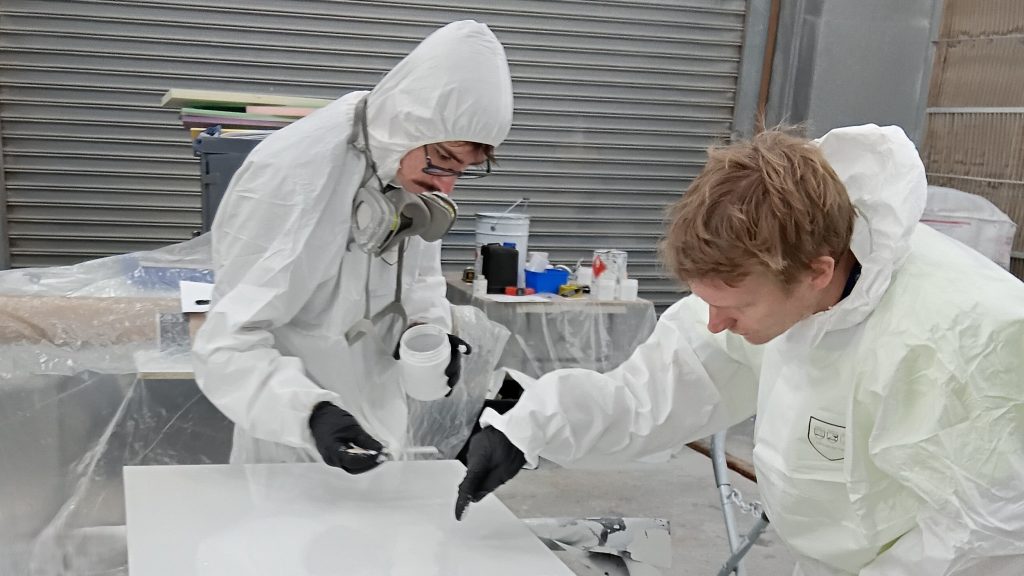
Before committing to a provider, check qualifications and the training organisations that deliver them against the National Training Register at training.gov.au, as coverage and delivery modes vary by location.
VET qualifications and their units are built through national training packages developed jointly by government, Jobs and Skills Councils, and industry, keeping training aligned with workplace needs and ensuring the resulting qualification is recognised nationally. Several specialist providers deliver this training around the country, among them:
- PARTEC, based in Brisbane, runs a dedicated composites training centre covering a wide range of polymer qualifications, including a short course on Motor Sport Composites, with trainers drawn from industry delivering both theory and hands-on practice.
- The Australian Institute of Engineering offers a flexible, nationwide delivery model that integrates training with workplace experience, developing programmes such as the Certificate III in Engineering – Composites Trade and Certificate III in Marine Craft Construction in partnership with employers and apprentices. AIE also has composite pathways in Certificate IV, Diploma and Advanced Diploma qualifications.
- South Metropolitan TAFE’s Naval Base campus in Western Australia delivers marine-focused training through its Certificate III in Engineering – Composites Trade and Certificate III in Marine Craft Construction.
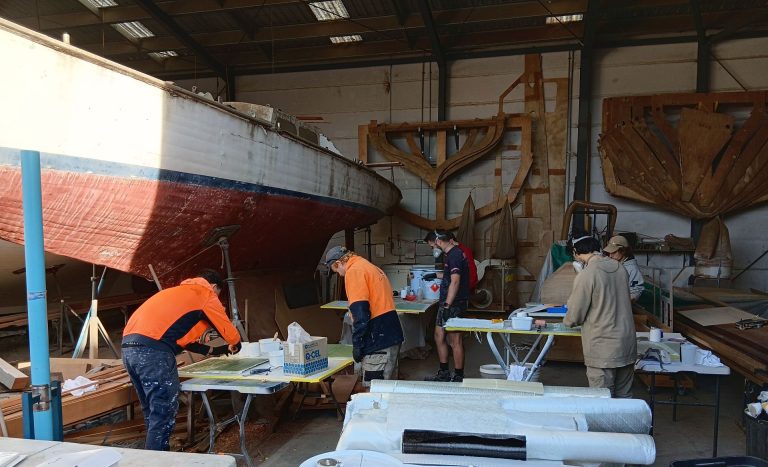
A manufacturer taking on an apprentice through one of these pathways can expect a graduate with skills in layup, material selection, handling and storage, component manufacture, repair and modification, resin and chemical formulation and joining techniques, alongside the problem-solving and project coordination that let them contribute to a production team from early on.
Beyond the trade
Manufacturers with design, R&D or technical roles to fill often look to engineering or science graduates instead. Degrees in automotive, mechanical, aerospace, or civil engineering all feed into composites work; Australia has no dedicated composites engineering degree, so these degrees provide the foundation, and internships, graduate research, or postgraduate study supply the specialist composites knowledge. Chemistry and polymer science graduates are equally valuable where the work depends on understanding resin systems and processing.
The two pathways aren’t separate. Depending on the qualification, field, and institution, VET graduates can progress from a Certificate to higher vocational qualifications and, through university articulation arrangements, to an engineering degree, sometimes with credit or recognition of prior learning. Arrangements differ by institution, so it’s worth checking directly with the university or RTO involved.
For manufacturers, start with training.gov.au and a direct conversation with the relevant provider, whether that’s a specialist centre such as PARTEC or the Australian Institute of Engineering, or a local TAFE. Composites Australia can help point members to the right contact.