Working in composites in Australia once began with explaining the material before discussing its capabilities.
In the 1970s and 80s, we were competing with steel and concrete in markets that had little reason to change. The early work was not about scale or export. It was about proving that glass-reinforced plastics could survive in corrosive environments, carry load and deliver a service life that conventional materials struggled to match. That phase mattered. It established technical credibility in sectors where failure is not tolerated—water, wastewater, mining and process industries. It also set the foundation for something that has become more apparent over time: composites are not just an alternative material; they change how things are designed, manufactured and installed.
Early exposure to international work occurred almost by accident. In the early 1990s, a project in Singapore required a manufacturing solution that did not exist locally.
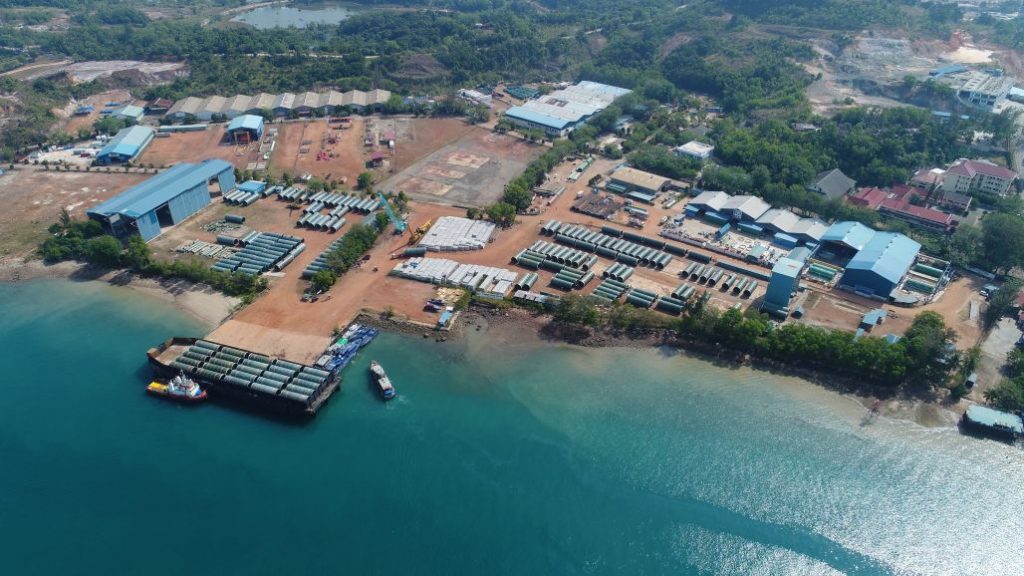
The answer was not to export product from Australia, but to establish capability closer to the project. That led to the setup of a plant in Batam, Indonesia—initially temporary, later permanent.
Looking back, that decision was driven by the need to understand how to operate across jurisdictions. It required adapting to different labour markets, supply chains, regulatory environments and customer expectations. It also showed that Australian engineering could be transferred and applied offshore, provided the systems and people were in place.
That experience shaped our approach to internationalisation. It is not a single step from domestic to export. It is a progression—from supplying offshore projects, to establishing a local presence, to integrating operations, capabilities and skills across multiple regions.
RPC Technologies has since progressed from a business that once operated primarily in Australia to one that now works across multiple countries, with manufacturing facilities in Australia, Southeast Asia and India, and projects delivered across the transport, infrastructure, asset services and defence sectors.
SEVERAL PROJECTS ILLUSTRATE HOW THIS HAS EVOLVED.
In Singapore, the transition to complex international work began with early odour-control systems for wastewater treatment plants. These projects required not just fabrication, but full design, manufacture and installation capability. This work set a benchmark for the application of composite systems in urban infrastructure, where corrosion resistance and durability are essential.
In Indonesia, the Batam facility became a production base not only for regional projects but also for a broader supply network. It demonstrated that offshore manufacturing could be integrated. Building on these experiences, more recently in New Zealand, the Central Interceptor project in Auckland required the design and installation of large-diameter GRP cascade shafts—up to 7.5 metres in diameter and 70 metres deep.
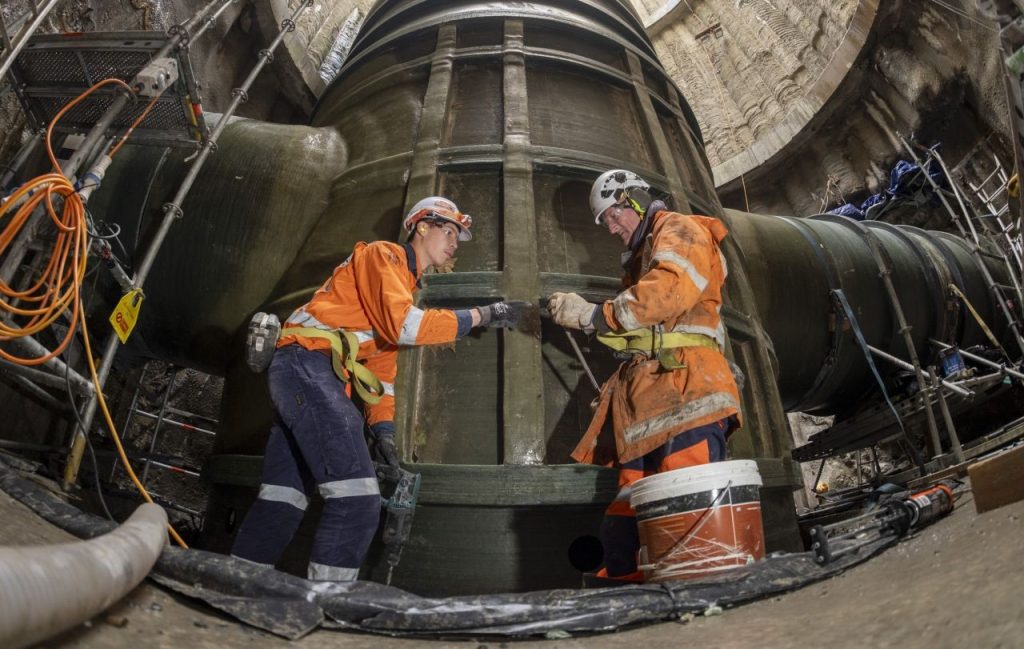
It was not a conventional project. It required coordination across multiple RPC facilities in Australia and offshore and disciplines, with engineering, manufacturing and site teams working as a single system.
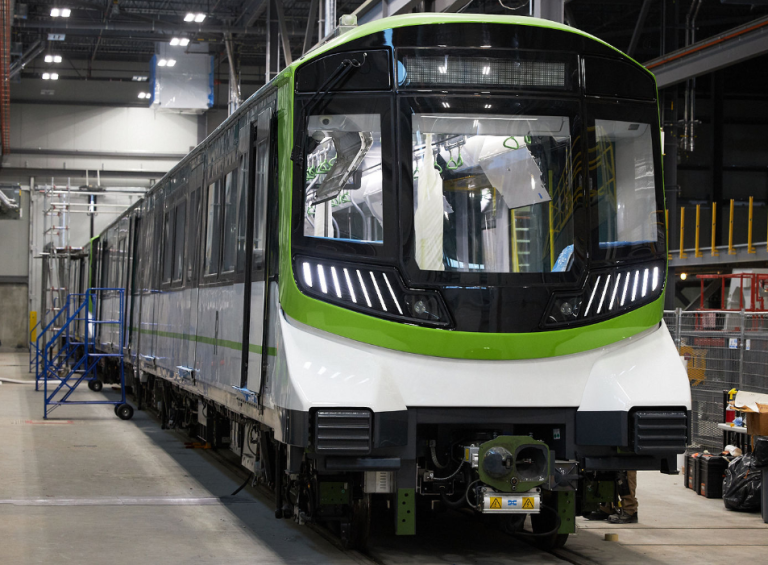
Now, in India, establishing manufacturing capability represents a new and unique phase in the progression. Unlike Batam, this effort is not project-driven. It is about positioning within a market, specifically Transport, that is growing, technically demanding and increasingly integrated into global supply chains.
Across these projects, a consistent theme emerges. International work is not just about exporting a product. It is about transferring capability—design, process control, quality systems— and adapting them to local conditions.
THE BROADER COMPOSITES INDUSTRY IN AUSTRALIA HAS FOLLOWED A SIMILAR PATH.
In the early years, the focus was domestic substitution—replacing traditional materials in local projects. Over time, as technical performance was demonstrated, Australian companies began supplying into international projects. In some cases, this was through direct export. In others, it involved partnerships, joint ventures or local manufacturing.
WHAT HAS CHANGED MORE RECENTLY IS THE INTENT.
There is a shift from opportunistic export to deliberate international positioning.
Companies are designing products and processes with global markets in mind from the outset. They are aligning with international standards, investing in certification and establishing a presence in key markets. This is not limited to large organisations.
Small and medium enterprises are increasingly “born global” in their thinking, even if their initial operations are domestic. The difference is that internationalisation is no longer seen as a later stage of growth – it is part of the starting point.
AT THE SAME TIME, THE BARRIERS HAVE NOT DISAPPEARED.
Working across borders introduces complexity—regulatory compliance, logistics, currency exposure, geopolitical shifts and cultural differences – in how projects are specified and delivered. In sectors such as defence and infrastructure, the requirements are even more demanding, with long qualification periods and strict standards.
There is also a practical reality. Many projects still favour local manufacturing. Proximity to the customer, shorter lead times and alignment with local standards often determine whether work is secured. That is why establishing capability in-market, rather than relying solely on export, has become more common.
FOR AUSTRALIA, THIS RAISES AN IMPORTANT POINT.
If we are to participate in global supply chains, we need to maintain a strong domestic capability base. Engineering, process development and advanced manufacturing do not develop in isolation. They require continuous investment in people, facilities and technology.
The risk is that, without that base, internationalisation becomes a one-way process—outbound capability without inbound reinforcement.
From my perspective, the opportunity is to treat international operations as an extension of the Australian capability, not a replacement for it. Engineering developed here can be applied globally. At the same time, experience gained offshore can be brought back to strengthen local operations.
After more than four decades in the industry, the direction is clear. Composites in Australia have moved from a niche material to a recognised solution across multiple sectors. The next phase is not about proving the material. It is about positioning the industry within global markets.
THAT REQUIRES A DIFFERENT MINDSET.
Not just exporting what we make, but deciding where we need to be, what capabilities we need to establish and how we integrate operations across regions.
We have done it before, often by necessity. The difference now is that our internationalisation is intentional. The future demands purposeful global engagement, building on Australian strengths and returning gained expertise to further reinforce our domestic capability and capacity.