CST Composites: From Australian Innovation to Global Composite Manufacturing
CST Composites has established a United States manufacturing operation through its joint venture, CST Optimum, in Utah, producing filament-wound composite pressure vessels for high-pressure energy applications and positioning Australian-developed filament winding technology within US industrial supply chains.
Written by Kerryn Caulfield, Executive Director, Composites Australia Inc.
CST Composites has established a United States manufacturing operation through its joint venture, CST Optimum, based in Utah. The facility produces filament-wound composite pressure vessels for compressed natural gas and other high-pressure applications, supplying North American automotive, aerospace, defence and energy markets. The expansion places Australian-developed filament winding technology within a US regulatory and industrial environment, where certification, proximity to customers and supply chain integration are required for market entry.
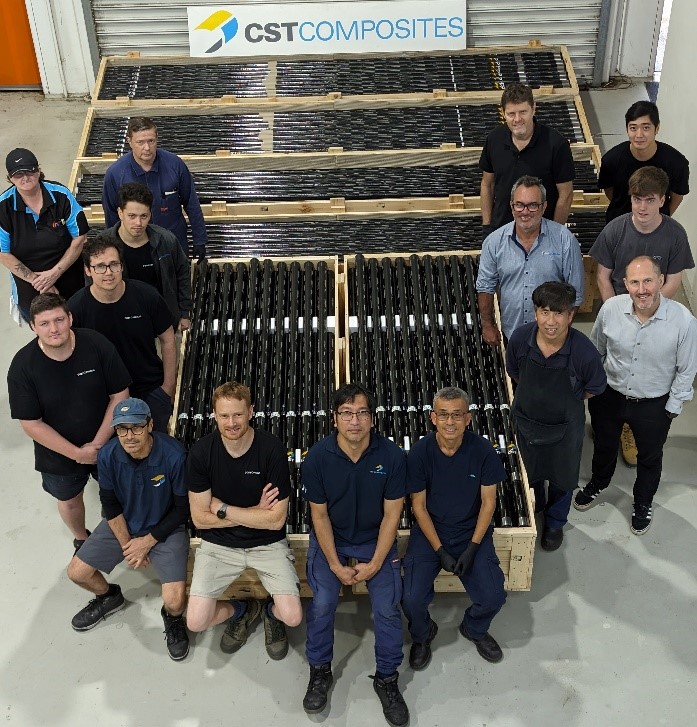
Established in 1995, CST Composites began with the design and manufacture of filament-wound carbon fibre tubing for performance sailing craft. Its operations, developed through sustained investment in engineering, R&D and process development, now includes automated filament winding, pultrusion, centre-less grinding, CNC machining, resin development, materials and finished product testing and the production of towpreg. Applications now span defence and industrial systems, components for household appliances, automotive and aerospace manufacturers and type 5 (liner-less) composite pressure vessels. Operating across two Sydney facilities, CST exports to over 20 countries and maintains an annual production capacity exceeding 100 tonnes.
Filament winding and towpreg machinery are designed and built in-house to achieve controlled fibre placement and predictable structural performance. Fibre placement from 0° to 90° is achievable.
Controlled variation in wall thickness is possible for tapered structures. Finite Element Analysis (FEA) predicts stiffness, weight and thickness within 2–3% of measured performance, with in-house testing confirming results.
Quality across all production lines is managed through CST’s proprietary Metrix software, which tracks and summarises quality data in real time across the filament winding and towpreg machines, integrating production scheduling, bill of materials management, stock tracking and full product costing.
Materials are tested in CST’s on-site laboratory using DSC, TGA, FTIR, DMA and rheometer analysis.
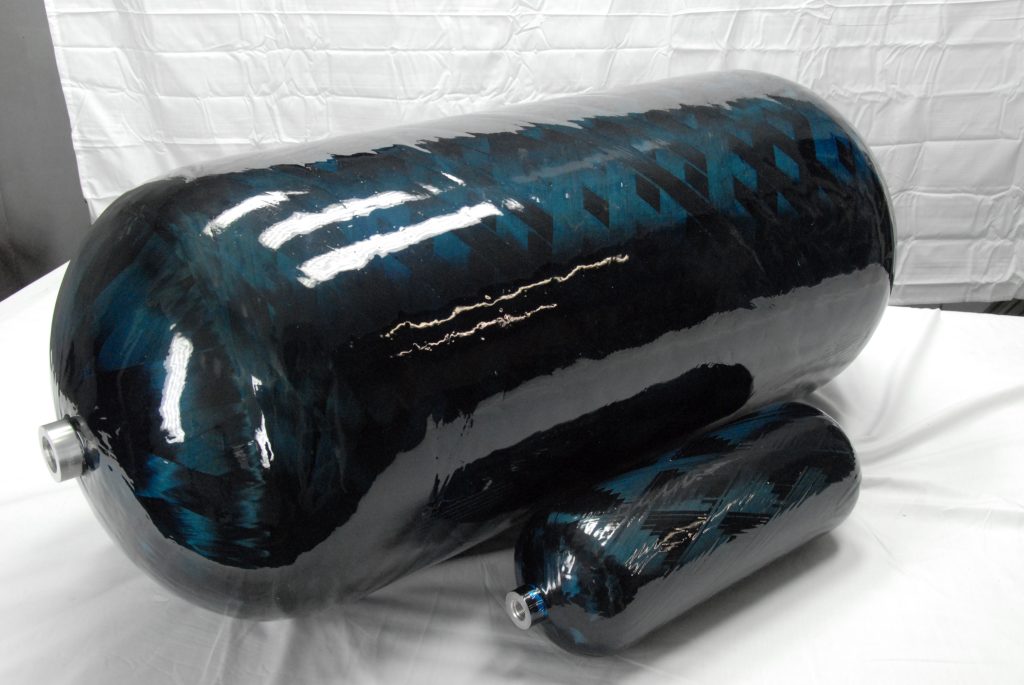
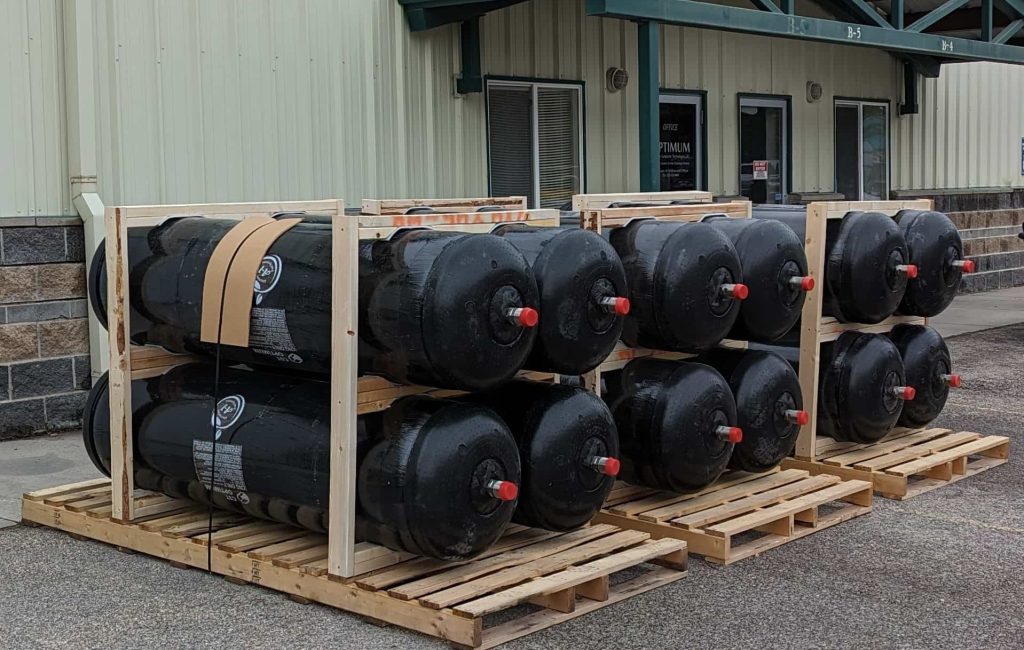
Filament-wound carbon fibre composite pressure vessels manufactured by CST Optimum for high-pressure gas storage applications, demonstrating controlled fibre placement for structural integrity.
A stand-out innovation is the Australian-made towpreg—continuous carbon fibre tows pre-impregnated with resin— process and associated machinery developed entirely in-house. Uniquely, the closed-loop control system reduces resin variability from ±3% to ±1%, with all product supplied 100% bandwidth checked during production. Applications include sailing craft, sporting goods, defence components and pressure vessels. The technology was validated at the 2024 Paris Olympics, where CST towpreg masts were used on around half the competing sailing fleet and achieved performance variation of less than 2% — down from approximately 15%.
CST Composites manufactured masts for about half the boats in the upcoming Paris Olympics. This success stems from a three-year program to mechanise carbon fibre towpreg manufacturing at their Kurnell and Ingleburn facilities.
CST’s achievements have been recognised with major awards: the 2018 Endeavour Award for Global Supply Chain Integrator of the Year; the 2024 Endeavour Award for Project of the Year for Olympic sailing tow-preg masts; the 2025 Composites Australia Innovation Award and recognition among Australia’s 50 Most Innovative Manufacturers for 2025 by @AuManufacturing.
Building on this foundation, entry into the pressure vessel market occurred in early 2022 through a joint venture with Optimum Composite Technologies, Inc in the United States. This partnership leverages CST’s advanced filament winding and manufacturing expertise with Optimum’s design, engineering and certification expertise in composite pressure vessels. The venture currently manufactures certified composite overwrapped pressure vessels (COPVs) for compressed natural gas (CNG) and other high-pressure applications, with lightweight composite structures offering significant weight reduction over traditional steel cylinders.
The joint venture, CST Optimum, operates in Utah within an established aerospace and defence manufacturing base, including Hill Air Force Base, Northrop Grumman, L3Harris Technologies and Boeing.
The region provides access to vertically integrated supply chains, a technically trained workforce and procurement pathways.
Commenting on the strategic choice of location, Glenn MacPherson, Director of Strategy and Business Development, notes “Utah offered established supply chains, operating conditions suited to scaling production and an established customer base for composite structures and high-pressure systems.
This positions CST Optimum near end users, certification bodies and specialist suppliers, enabling Australian-developed filament winding systems and controls to be applied within a US regulatory and commercial framework.”
CNG pressure vessels for North American applications require in-market manufacturing and alignment with US standards. CST Optimum’s CNG COPVs are certified to NGV2-2023 at 250 bar service pressure, with all testing and production conducted at the Utah facility.
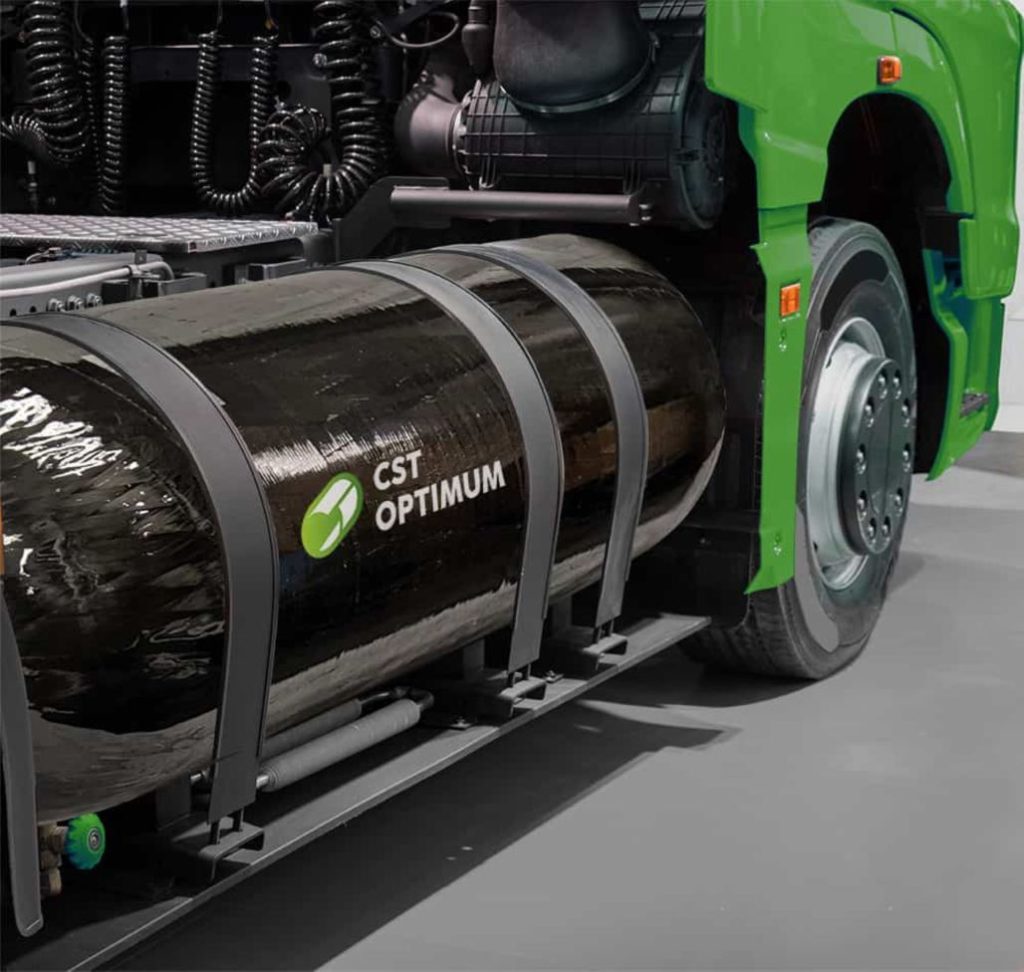
CST Optimum filament-wound composites carbon fibre pressure
vessel produced at scale across varying sizes for high-pressure energy storage.
As the hydrogen economy develops, CST Optimum is well positioned to extend its composite vessel capability into hydrogen storage, leveraging the same design, winding and certification infrastructure already established for CNG.
Australia remains central to the company’s global reach. Specifically, the New South Wales facilities continue to produce filament-wound components, advance resin systems and towpreg, as well as develop machine architecture and process control. Meanwhile, the Metrix platform connects both sites, ensuring quality data and production intelligence flow consistently between Sydney and Utah. As a result, the Utah operation applies this manufacturing knowledge within a US regulatory and customer environment.
As MacPherson states, “You can’t shortcut production of pressure vessels. Establishing in Utah meant embedding those processes locally while maintaining the production and control disciplines developed in Australia. It was also about being where the customers are.” In line with this approach, CST Optimum extends manufacturing capability offshore while retaining design and process control in Australia. As a result, the company expands its global reach without displacing its core operations that has defined it for three decades enduring a balanced and integrated global presence.
COMPOSITE OVERWRAPPED PRESSURE VESSELS
CST Optimum designs and manufactures Type 3 and Type 4 composite overwrapped pressure vessels for compressed natural gas, hydrogen and other high-pressure applications. Type 3 vessels use aluminium liners with composite overwrap, while Type 4 vessels employ polymer liners with composite overwrap. Compared with traditional all-steel cylinders, composite vessels achieve significant weight reduction — a critical parameter in transport and aerospace systems.
In early 2024 CST Optimum began making type 4 pressure vessels for CNG and has since developed and certified 10 different sizes to the CSA/ANSI NGV 2:23 standard (which requires passing up to 14 different tests) which are being sold into the US market.
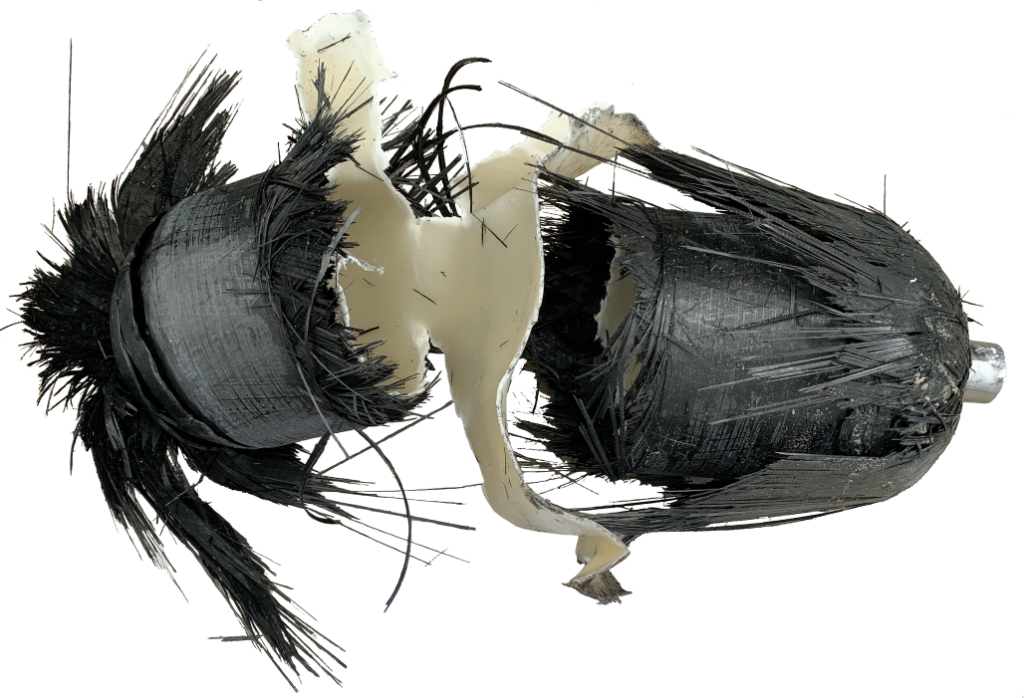
Carbon fibre overwrapped pressure
vessel following burst testing, showing fibre fracture and liner failure under extreme internal pressure.